
What's Happening?
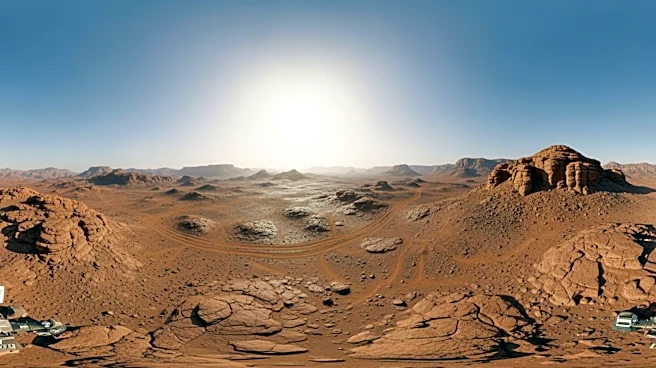
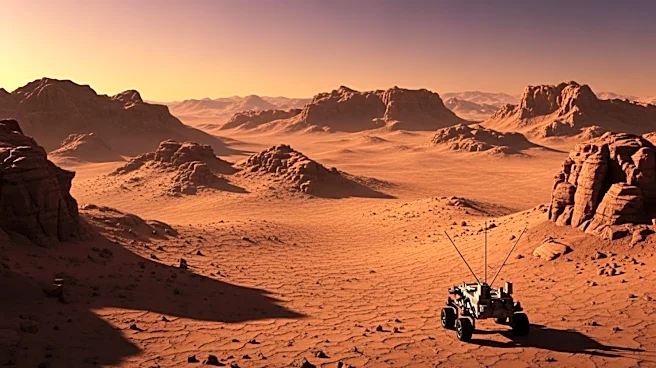
NASA has released new panoramic images from its Perseverance and Curiosity rovers, showcasing the diverse and ancient landscapes of Mars. The Perseverance rover captured a mosaic of 980 images of the 'Lac
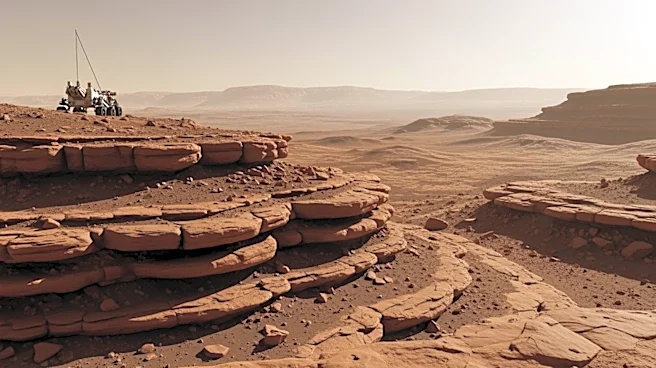
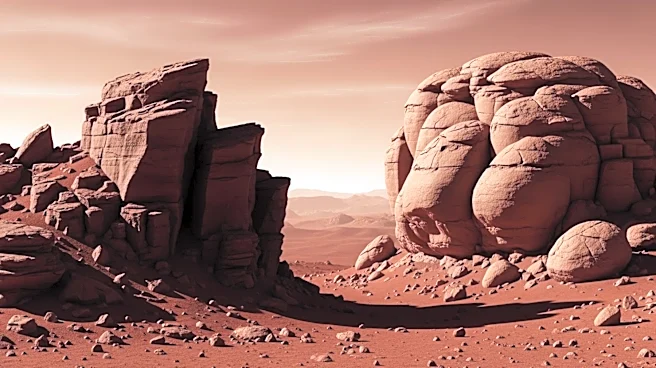
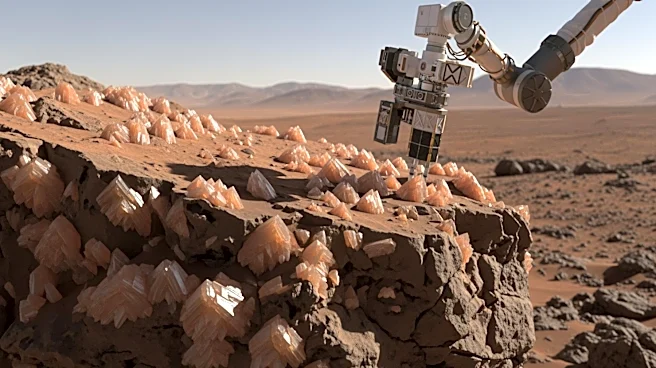
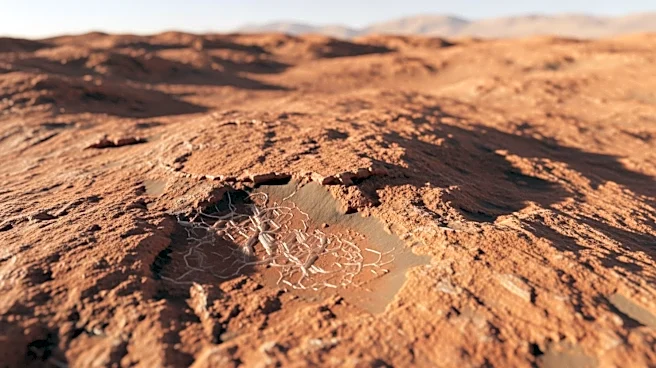
de Charmes' area near Jezero Crater, highlighting terrain shaped by ancient water. This region is considered a prime location for searching for past life due to its geological features formed billions of years ago. Meanwhile, the Curiosity rover's panorama of Gale Crater reveals 'boxwork' formations, indicating past groundwater activity. These images, taken miles apart, provide complementary insights into Mars' history and the role of water in shaping its surface.
Why It's Important?
The release of these panoramic images is significant as it enhances our understanding of Mars' geological history and the potential for past life on the planet. By studying these landscapes, scientists can gather evidence of ancient environments and water activity, which are crucial for understanding Mars' habitability. The findings could inform future missions and the search for life beyond Earth. Additionally, these insights contribute to the broader scientific community's efforts to reconstruct Mars' past and assess its potential for supporting life, impacting future exploration strategies and international space collaboration.
What's Next?
As the Perseverance and Curiosity rovers continue their missions, they will explore new regions on Mars to gather more data on the planet's geological history. Perseverance will head towards older terrains, while Curiosity will explore areas enriched with sulfates. These missions aim to uncover more about Mars' past environments and the role of water, potentially leading to groundbreaking discoveries about the planet's ability to support life. The ongoing research will also guide future Mars missions, including potential human exploration, by identifying key areas of interest and refining scientific objectives.