

What's Happening?
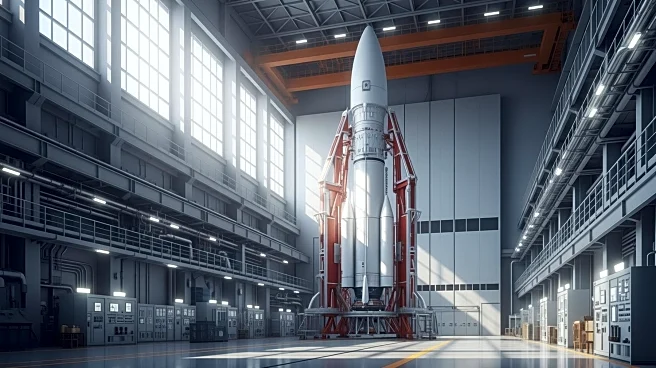
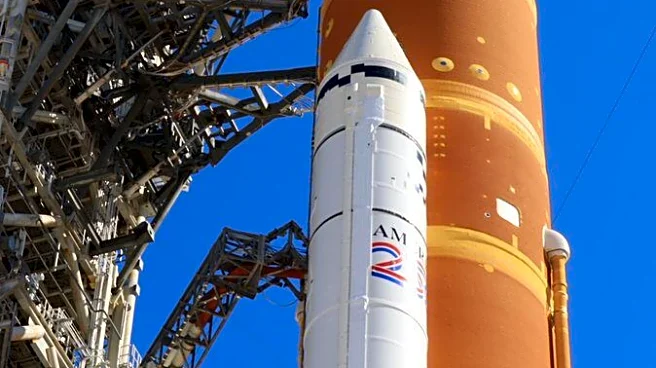
NASA's giant moon rocket is set to return to the hangar for additional repairs after a helium system malfunction was discovered. This issue arose shortly after a successful repeat fueling test aimed at addressing hydrogen fuel leaks. The helium system is crucial
for purging the engines and pressurizing the fuel tanks. The rocket's return to the Vehicle Assembly Building at Kennedy Space Center is necessary to diagnose and fix the problem. This development further delays the Artemis II mission, which aims to send astronauts to the moon for the first time in over 50 years. The mission, originally scheduled for March 6, is now postponed until at least April, contingent on the success of the repairs.
Why It's Important?
The delay in NASA's Artemis II mission underscores the challenges of space exploration and the complexity of modern rocket systems. The mission is significant as it marks the first crewed lunar mission since the Apollo program, aiming to rekindle human exploration of the moon. The delay impacts not only NASA's timeline but also international collaborations, as the mission includes astronauts from both the United States and Canada. Successful resolution of these technical issues is crucial for maintaining momentum in NASA's broader Artemis program, which seeks to establish a sustainable human presence on the moon and eventually pave the way for human exploration of Mars.
What's Next?
NASA plans to conduct a thorough investigation and repair of the helium system malfunction. The space agency aims to preserve the possibility of an April launch, although this will depend on the outcome of the repairs. The astronauts assigned to the mission remain on standby in Houston, ready to proceed once the technical issues are resolved. The space community and international partners will be closely monitoring the situation, as the success of Artemis II is pivotal for future lunar and Mars exploration missions.