





What's Happening?
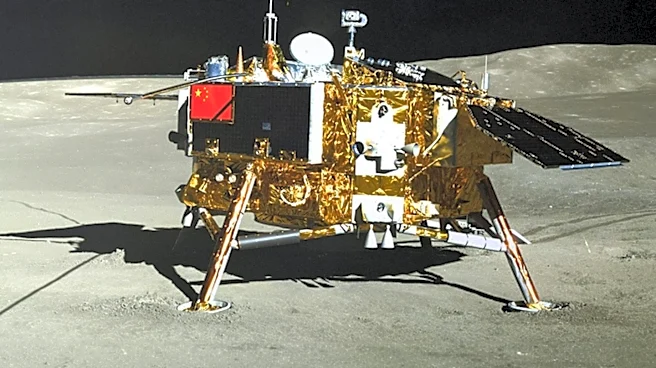
China is planning to deploy robot dogs as part of its International Lunar Research Station (ILRS) initiative, aiming to establish a moon base by 2035. These robot dogs are expected to assist astronauts in various tasks, including exploring the lunar landscape,
collecting rock samples, and conducting detailed research. The initiative is part of China's broader efforts to advance its space exploration capabilities and establish a long-term human presence on the moon. The robot dogs will also play a role in preparing the moon for human settlement by harvesting water ice and mining minerals.
Why It's Important?
China's plan to use robot dogs for lunar exploration highlights the increasing role of robotics and artificial intelligence in space exploration. This initiative could significantly enhance the efficiency and safety of lunar missions by reducing the need for human intervention in hazardous environments. The deployment of robot dogs also reflects China's ambition to become a leading player in space exploration, potentially challenging the dominance of the United States and other countries in this field. The success of this initiative could pave the way for more advanced robotic technologies in future space missions.
What's Next?
As China progresses with its lunar research station plans, further developments in robotic technologies and space exploration strategies are expected. The integration of robot dogs into lunar missions could lead to advancements in autonomous systems and artificial intelligence, enhancing the capabilities of future space missions. Additionally, China's efforts may prompt other countries to accelerate their own space exploration initiatives, potentially leading to increased international competition in space. The success of China's lunar research station could also influence global policies and collaborations in space exploration.