


What's Happening?
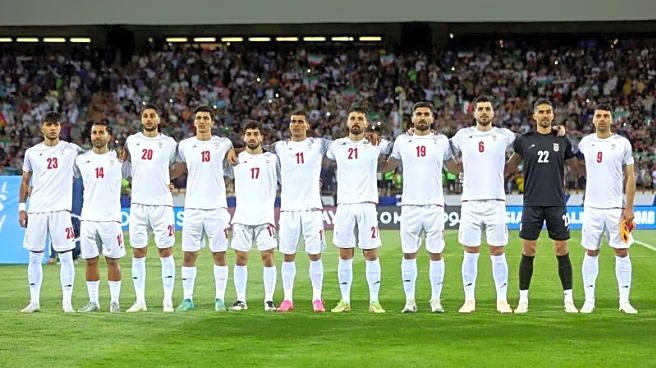
Several members of the Iranian women's soccer team, who sought asylum in Australia during the AFC Women's Asian Cup, are facing pressure to return to Iran. Zahra Meshkinkar, a technical staff member, has been relaying messages from Iranian football authorities
to convince players to abandon their asylum plans. The team initially traveled to Malaysia after some members applied for asylum in Australia. The players have been under tight supervision, with restrictions on their communication and movement. The situation escalated when the team refused to sing the Iranian national anthem, leading to accusations of 'wartime treason' by Iranian state media. The Iranian judiciary has issued warnings to the players, urging them to return for their families' sake.
Why It's Important?
This situation highlights the broader human rights issues faced by Iranian athletes, particularly women, who are often caught between international opportunities and domestic political pressures. The players' decision to seek asylum reflects their fear of repercussions upon returning to Iran, where dissent is harshly punished. The international community, including human rights organizations, is closely monitoring the situation, as it underscores the ongoing struggle for women's rights in Iran. The incident also places a spotlight on the role of sports as a platform for political expression and the risks athletes face when they use it.
What's Next?
The Iranian government is likely to continue exerting pressure on the players to return, potentially using their families as leverage. International human rights groups may increase their advocacy efforts to ensure the players' safety and freedom of choice. The situation could also influence future international sporting events, as organizers and host countries may need to consider the political implications of participating nations' internal policies. The players' decisions in the coming days will be crucial in determining their personal futures and the broader narrative of sports and human rights.