
What's Happening?
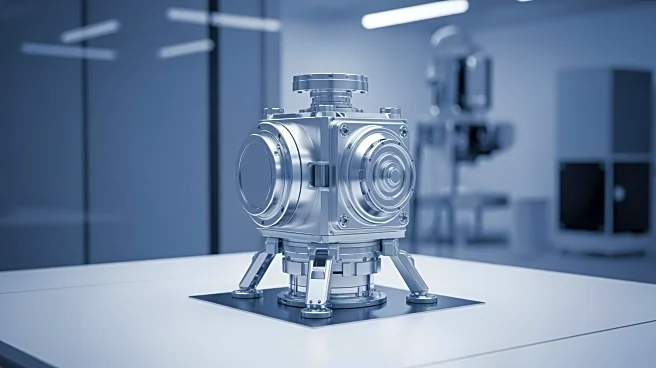
NASA's Libera instrument, designed to monitor Earth's radiation budget, has completed environmental testing and is ready for delivery. The instrument will be part of the Joint Polar Satellite System-4
(JPSS-4), set to launch in 2027. Developed by the University of Colorado Boulder's Laboratory for Atmospheric and Space Physics, Libera will continue the data record of Earth's radiation budget, following previous instruments in the Clouds and the Earth's Radiant Energy System (CERES) series. The instrument will help in understanding the flow of radiant energy in the Earth-atmosphere system, which is crucial for weather forecasting, agricultural planning, and evaluating Earth system trends.
Why It's Important?
The successful testing and upcoming deployment of the Libera instrument are significant for maintaining continuous monitoring of Earth's radiation budget. This data is vital for understanding climate dynamics and making informed decisions related to environmental policies and economic planning. The collaboration between NASA and NOAA on this project exemplifies the importance of inter-agency cooperation in advancing Earth science research. The insights gained from Libera's data will support strategic planning and risk assessments, benefiting both governmental and commercial sectors.
What's Next?
Libera will be integrated onto the JPSS-4 satellite, alongside other instruments, and launched in 2027. Once operational, it will provide critical data to enhance our understanding of Earth's climate system. The continued monitoring of Earth's radiation budget will support ongoing research and policy-making efforts aimed at addressing climate change and its impacts. NASA and NOAA will continue to collaborate on future missions to ensure the continuity of essential Earth science measurements.