






What's Happening?
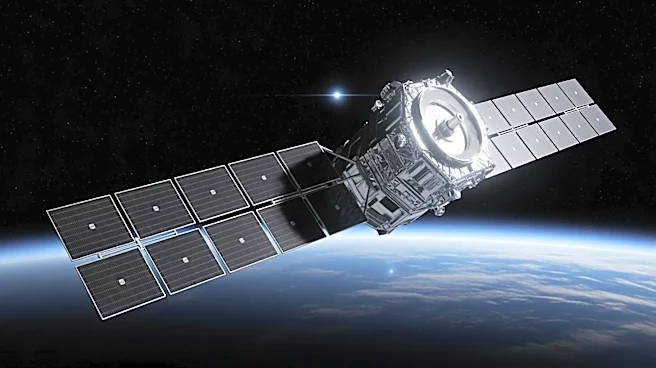
NASA has successfully extended the operational life of its Swift observatory by halting most of its science operations to minimize atmospheric drag. This strategic decision has delayed the spacecraft's descent below the critical altitude of 300 km until
September, rather than the initially predicted July. The Swift observatory, which is crucial for observing gamma-ray bursts, was facing increased atmospheric drag due to the Sun reaching its solar maximum phase, causing Earth's atmosphere to expand. NASA's efforts to reorient the spacecraft have bought additional time for a planned reboost mission, potentially adding years to its operational life.
Why It's Important?
The extension of Swift's operational life is significant for the scientific community, as it continues to provide valuable data on gamma-ray bursts and other cosmic phenomena. The delay in its descent allows NASA to plan a reboost mission, which, if successful, could prolong the observatory's contributions to space science. This development underscores the importance of strategic planning and resource management in extending the life of space missions, which can lead to cost savings and enhanced scientific output. The success of this maneuver also highlights NASA's ability to adapt to changing conditions in space, ensuring the continued collection of critical data.
What's Next?
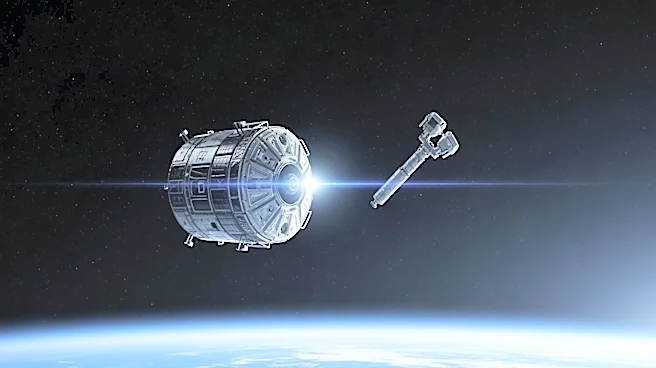
NASA is preparing for a reboost mission scheduled for launch in June or July, which aims to elevate Swift's orbit and extend its operational life further. The success of this mission will depend on precise calculations and the ability to execute the reboost without compromising the spacecraft's integrity. The scientific community will be closely monitoring the mission's progress, as it could set a precedent for future efforts to extend the life of aging space assets. Additionally, NASA will continue to update its forecasts and strategies based on evolving space weather conditions and the spacecraft's performance.