
What's Happening?
The United States is experiencing a significant decline in college enrollment, a phenomenon referred to as a 'demographic cliff' due to smaller birth cohorts reaching college age. A forecast predicts a 13%
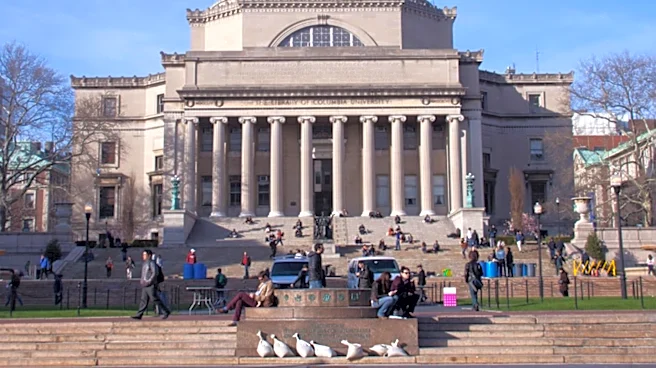
drop in enrollment by 2041, with the Midwest and Northeast already seeing sharp declines. Despite this overall decrease, elite and 'name-brand' universities are becoming increasingly competitive. Schools with an acceptance rate below 20% now receive 2.35 million applications annually, a substantial increase from 800,000 two decades ago. This trend, described as a 'flight to quality,' sees top universities and major flagship institutions attracting a disproportionate number of applications. Conversely, more accessible regional colleges, which primarily serve middle- and lower-income students, are facing a crisis of falling enrollment. This situation could lead to the closure of some of these institutions, potentially leaving many prospective students without feasible local options for higher education.
Why It's Important?
This dual trend has significant implications for the U.S. higher education landscape and broader societal equity. The increasing competitiveness of elite institutions means that access to these highly sought-after degrees will become even more challenging, potentially exacerbating existing socioeconomic disparities. Families are increasingly questioning the value of a costly degree unless it guarantees a clear payoff, driving demand towards institutions perceived to offer the best returns on investment. The potential closure of regional colleges could severely limit educational opportunities for middle- and lower-income students, particularly those who rely on local, affordable options. This could lead to a less educated workforce in certain regions, impacting local economies and social mobility. The decline in overall enrollment also poses financial challenges for many institutions, potentially leading to program cuts, faculty reductions, and a re-evaluation of higher education funding models across the country.
What's Next?
The ongoing decline in college enrollment is expected to continue, with the predicted 13% drop by 2041 suggesting a sustained challenge for many institutions. Regional colleges, in particular, will likely face increasing pressure to adapt, innovate, or consolidate to remain viable. Policy discussions may emerge regarding funding for higher education, particularly for institutions serving diverse socioeconomic populations, to prevent widespread closures. Elite universities may continue to see an influx of applications, potentially leading to even lower acceptance rates and increased selectivity. The long-term impact could include a restructuring of the higher education system, with a greater divide between highly selective, well-resourced institutions and struggling regional colleges. This could also prompt a re-evaluation of the value proposition of a college degree and alternative pathways to career success.
Beyond the Headlines
Beyond the immediate enrollment figures, this trend reflects a deeper societal re-evaluation of the purpose and value of higher education. The 'flight to quality' suggests a growing consumer-driven mindset among students and families, where the perceived return on investment dictates educational choices. This could lead to a more stratified higher education system, where a few institutions become increasingly exclusive, while others struggle for survival. The potential disappearance of local college options could also erode community identity and local economic development, as these institutions often serve as cultural and intellectual hubs. Furthermore, the emphasis on clear payoffs from a degree might inadvertently devalue fields of study that do not immediately lead to high-paying jobs but are crucial for a well-rounded society, such as humanities and arts. This shift could reshape not only who attends college but also what kind of education is prioritized in the U.S.