






What's Happening?
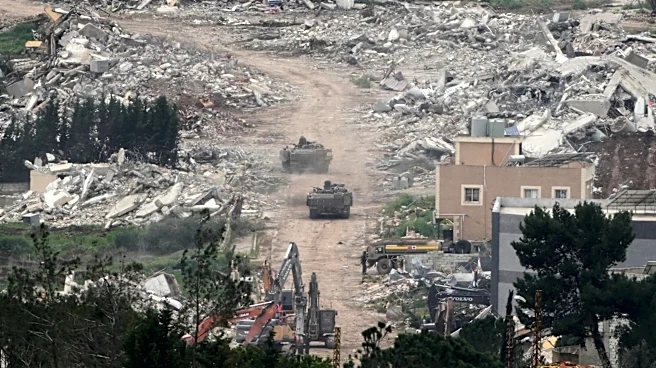
Female soldiers in the Israeli Defense Forces (IDF) are actively serving in combat roles in southern Lebanon, despite facing criticism and skepticism about their contributions. A recent film aired by Channel 14 questioned the role of female combat soldiers,
sparking backlash from military officials and religious leaders. Critics argue that integrating women into combat roles contradicts religious laws and military orders, labeling it a 'moral weakness.' Despite this, the number of women in combat roles has significantly increased, with about 8,500 women serving in 2025, more than double the number in 2020. Female soldiers are participating in various capacities, including combat soldiers, doctors, and paramedics, and are determined to prove their worth in the field.
Why It's Important?
The involvement of women in combat roles within the IDF highlights ongoing debates about gender equality in military service. The increase in female combatants reflects broader societal shifts towards gender inclusivity, challenging traditional norms and religious beliefs. This development is significant as it may influence military policies and the perception of women's capabilities in high-stakes environments. The IDF's decision to integrate women into combat roles could set a precedent for other military forces worldwide, potentially leading to more inclusive practices. However, the criticism from religious and conservative groups underscores the cultural and ideological challenges that persist in achieving gender equality in the military.
What's Next?
As the number of female combat soldiers continues to rise, the IDF may face increased pressure to address the criticisms and ensure that women are fully integrated and supported in their roles. This could involve revisiting training programs, addressing biases within the ranks, and fostering an environment that values the contributions of all soldiers, regardless of gender. The ongoing debate may also prompt further discussions within Israeli society about the role of women in the military and other traditionally male-dominated fields. The IDF's approach to these challenges could influence future policies and the broader movement towards gender equality in Israel and beyond.