



What's Happening?
The White House Task Force to Eliminate Fraud, chaired by Vice President JD Vance, has announced that over 1,500 firms holding more than $53 billion in federal contracts are potentially noncompliant with federal E-Verify requirements. This initiative,
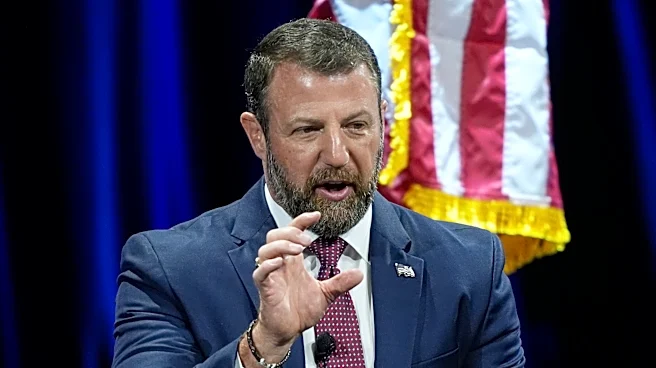
coordinated by the Department of Homeland Security (DHS) and the U.S. General Services Administration (GSA), aims to ensure that federal contractors employ a legal workforce. Notices have been issued to these firms, requiring them to provide proof of compliance within 30 days. E-Verify is a free online system managed by U.S. Citizenship and Immigration Services (USCIS) that helps employers confirm the work authorization of new hires. Homeland Security Secretary Markwayne Mullin and GSA Administrator Edward C. Forst have also sent letters to Senior Procurement Executives, urging enhanced compliance screening across federal agencies.
Why It's Important?
This initiative is significant as it underscores the administration's commitment to enforcing immigration laws and ensuring the integrity of federal contracting. The identification of potentially $53 billion in noncompliant contracts highlights a substantial issue within the federal procurement system, suggesting that taxpayer money may have been used to employ individuals not authorized to work in the U.S. This action aims to protect American jobs and ensure fair competition among businesses seeking federal contracts. For businesses, the increased scrutiny means a heightened need for strict adherence to E-Verify regulations, with potential consequences including contract cancellation, suspension, or debarment for noncompliance. This move could also impact the labor market for federal contractors, potentially leading to more rigorous hiring practices and a shift towards a fully documented workforce.
What's Next?
The 1,579 notified contractors now have 30 days to respond and provide proof of E-Verify compliance. Following this period, DHS and GSA will likely review the submissions and take further action against firms that remain noncompliant. This could include investigations, penalties, contract terminations, or debarment from future federal contracts. Federal agencies are expected to enhance their compliance screening processes as urged by DHS Secretary Mullin and GSA Administrator Forst. This initiative is part of a broader effort by the White House Task Force to Eliminate Fraud to strengthen oversight of federal spending, suggesting that similar compliance drives may occur in other areas of federal contracting. The outcome will likely set a precedent for future enforcement actions regarding E-Verify requirements for federal contractors.
Beyond the Headlines
Beyond the immediate enforcement actions, this initiative has broader implications for the U.S. economy and immigration policy. It signals a more aggressive stance by the administration on immigration enforcement within the business sector, potentially influencing hiring practices beyond federal contractors. The focus on E-Verify compliance could lead to increased demand for legal employment verification services and a more formalized approach to workforce management across industries. Ethically, it raises questions about corporate responsibility in adhering to federal employment laws and the role of government in ensuring a legal workforce. Legally, it reinforces the importance of the Federal Acquisition Regulation (FAR) clause 52.222-54, which mandates E-Verify use for covered federal contractors. This could also spark debates about the effectiveness and potential burdens of the E-Verify system on businesses, particularly smaller enterprises.