








What's Happening?
NASA's Artemis II mission has successfully returned to Earth after a historic 10-day journey around the Moon. The mission, which included NASA astronauts Reid Wiseman, Victor Glover, Christina Koch, and Canadian Space Agency astronaut Jeremy Hansen, marked
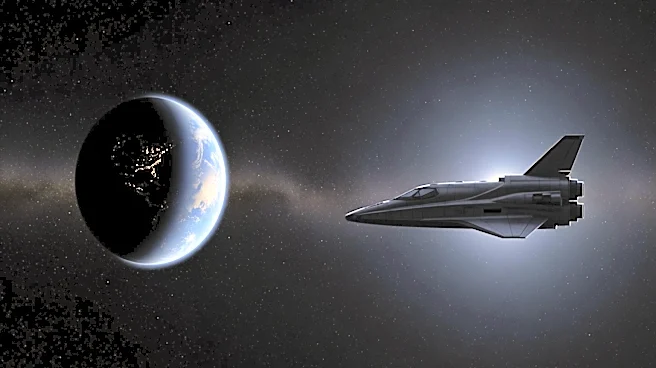
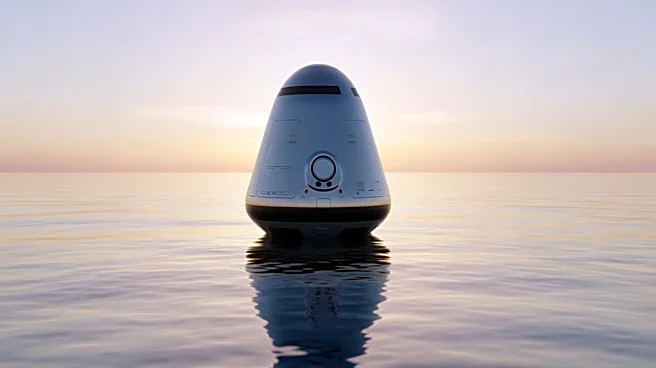
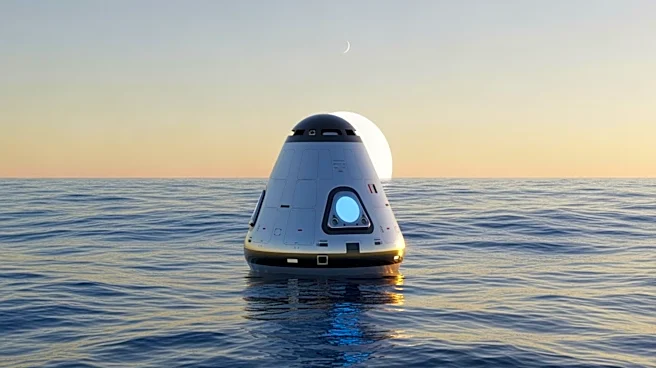
the first time humans traveled to the Moon in over 50 years. The crew splashed down in the Pacific Ocean off the coast of San Diego, completing a journey that took them 252,756 miles from Earth at their farthest point. The mission demonstrated the capabilities of NASA's Orion spacecraft and Space Launch System (SLS) rocket, paving the way for future lunar exploration. The astronauts conducted various tests and scientific investigations during their flight, including piloting demonstrations and evaluations of the spacecraft's life support systems. The mission also set a new record for the farthest distance traveled by humans from Earth, surpassing the previous record set by Apollo 13.
Why It's Important?
The successful completion of the Artemis II mission is a significant milestone in NASA's efforts to return humans to the Moon and establish a sustainable presence there. This mission tested critical systems and operations that will be essential for future lunar missions, including Artemis III, which aims to land astronauts on the Moon's surface. The Artemis program is part of NASA's broader goal to explore more of the Moon for scientific discovery and economic benefits, and to lay the groundwork for human missions to Mars. The mission's success demonstrates the effectiveness of international collaboration, with contributions from the Canadian Space Agency and other partners. It also highlights the advancements in space technology and exploration capabilities, reinforcing the United States' leadership in space exploration.
What's Next?
Following the successful splashdown of Artemis II, NASA will focus on preparing for the Artemis III mission, which is scheduled to test integrated operations with commercially built Moon landers in low Earth orbit. This mission will be a crucial step towards landing astronauts on the lunar surface and establishing a Moon Base. NASA plans to continue sending Artemis astronauts on increasingly challenging missions to explore more of the Moon and eventually send the first astronauts to Mars. The agency will also work on addressing technical issues identified during Artemis II, such as the helium leak in the propulsion system, to ensure the success of future missions.