


What's Happening?
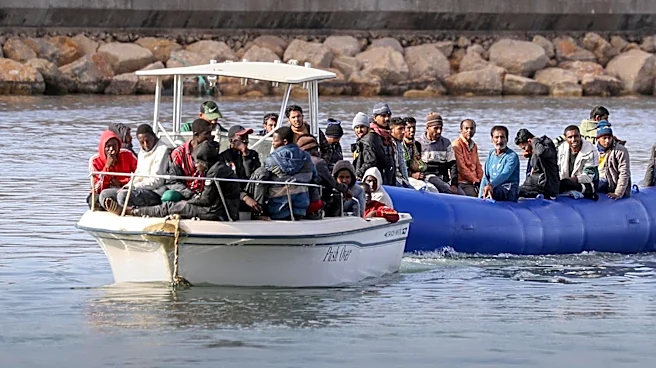
Eleven young men from the Raparin Independent Administration, who were stranded in Libya, have been safely repatriated to the Kurdistan Region. This repatriation follows direct orders from Kurdistan Region Prime Minister Masrour Barzani, who instructed
the Kurdistan Regional Government’s (KRG) Ministry of Interior and Department of Foreign Relations to facilitate their return. The men were welcomed at the airport by Ali Saeed, director of Data and Information, and received medical care before being reunited with their families. This event is part of a larger effort, as authorities previously repatriated 33 young men from the same area and are currently working to locate an additional 10 individuals whose whereabouts remain unknown. The KRG has stated that measures implemented in recent months to curb illegal migration have led to a significant decrease in irregular migration attempts.
Why It's Important?
The repatriation of these young men underscores the significant risks associated with irregular migration routes, which often leave individuals stranded in dangerous conditions and vulnerable to exploitation. For the Kurdistan Region, these efforts highlight the government's commitment to protecting its citizens and addressing the humanitarian aspects of migration. The KRG's proactive measures to curb illegal migration, including the recent repatriations, aim to safeguard its youth from the perils of unauthorized journeys. The ongoing efforts to locate the remaining 10 individuals demonstrate the persistent challenges faced by families and authorities in tracking and ensuring the safety of those who attempt to migrate through unofficial channels. This situation also brings attention to the broader issue of human trafficking and the need for international cooperation to address these complex problems.
What's Next?
The KRG will continue its efforts to locate and repatriate the remaining 10 young men from the Raparin area who are still unaccounted for in Libya. This will likely involve ongoing coordination between the Ministry of Interior and the Department of Foreign Relations, potentially engaging with international organizations or Libyan authorities. The KRG is also expected to maintain and potentially enhance its measures aimed at curbing illegal migration, reinforcing its commitment to protecting citizens from the dangers of unauthorized routes. Families of the repatriated individuals will continue to receive support, and public awareness campaigns regarding the risks of irregular migration may be intensified to deter future attempts. The broader implications for regional migration policies and international cooperation on human trafficking remain a key area of focus.
Beyond the Headlines
The plight of these young men highlights the desperate circumstances that drive individuals to undertake perilous journeys in search of better opportunities, often falling prey to human traffickers and exploitative networks. Beyond the immediate humanitarian concern, this situation points to deeper socio-economic factors within the Kurdistan Region that may compel youth to seek irregular migration paths. The KRG's response, while commendable in its immediate impact, also raises questions about long-term strategies to address the root causes of irregular migration, such as unemployment, lack of opportunities, or political instability. The involvement of various government departments in the repatriation process underscores the multi-faceted nature of migration challenges, requiring coordinated efforts across security, foreign relations, and social welfare sectors. This event also serves as a stark reminder of the global issue of irregular migration and the ethical responsibilities of governments to protect their citizens abroad.