



What's Happening?
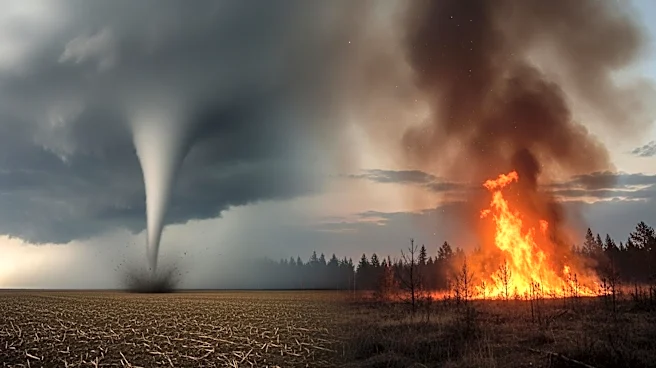
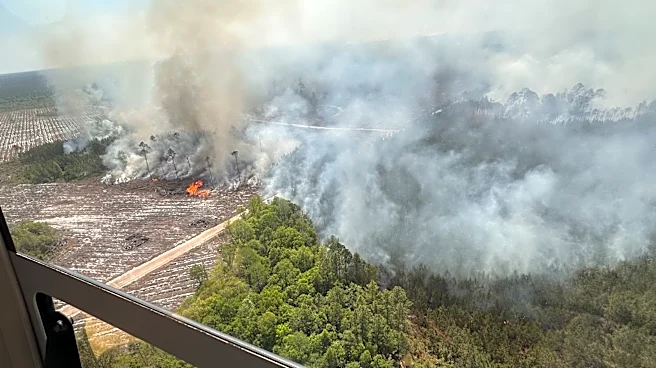
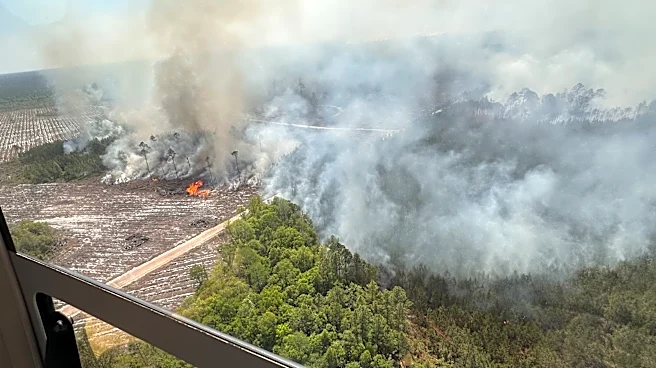
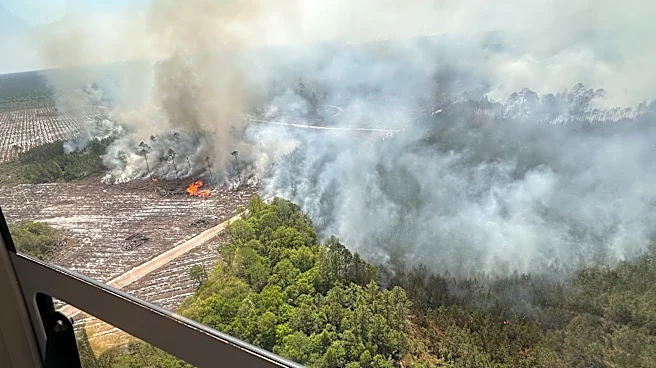
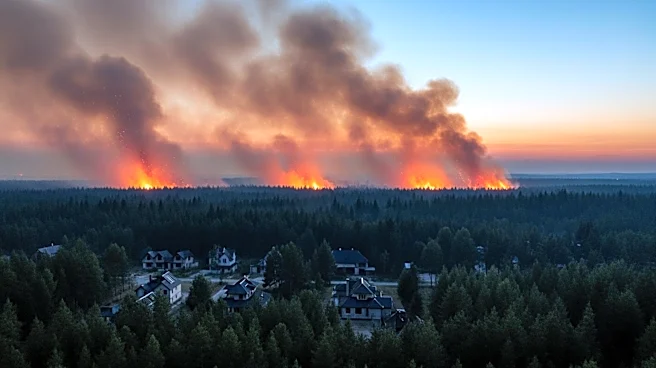
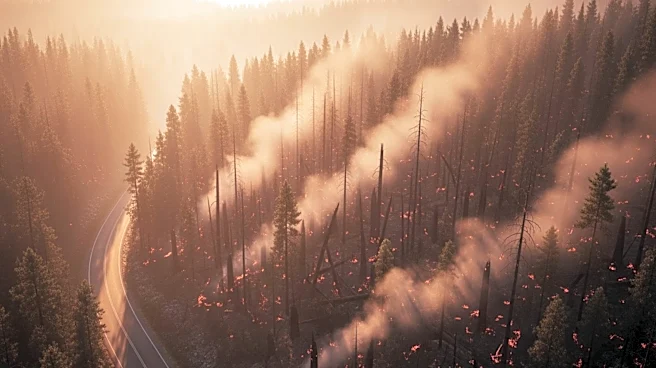
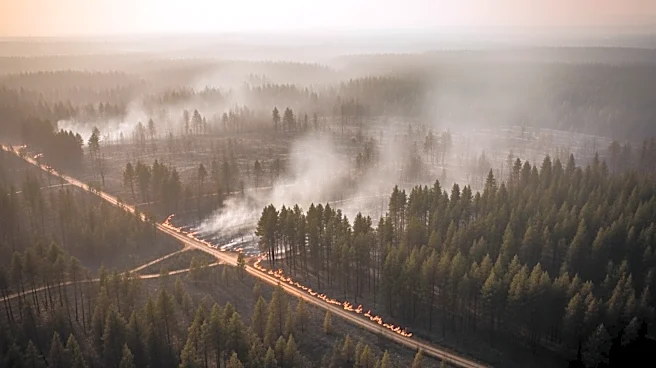
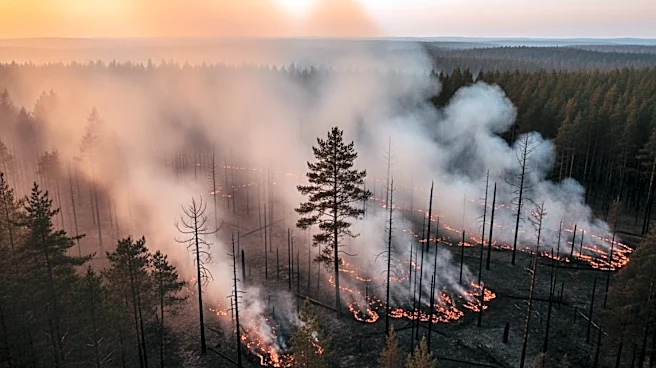
In April 2026, two significant wildfires, the Pineland Road and Highway 82 fires, have ravaged southern Georgia, burning over 50,000 acres. These fires, fueled by an extreme drought and strong winds, have destroyed more than 120 homes, marking a historic
loss for the state. The Highway 82 fire began due to a welding spark, while the Pineland Road fire was ignited by a mylar balloon hitting power lines. Despite recent rains aiding firefighting efforts, containment remains low, with the Pineland Road fire at 23% and Highway 82 at 32%.
Why It's Important?
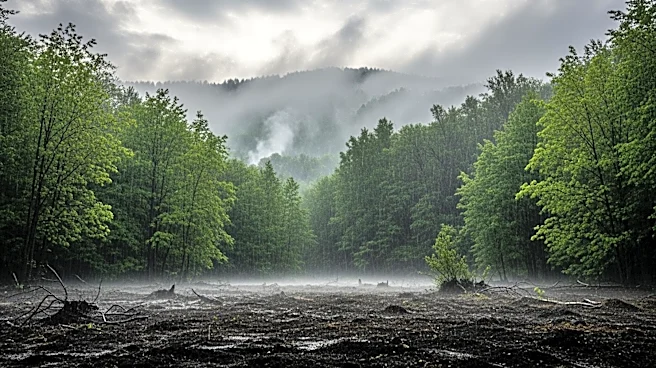
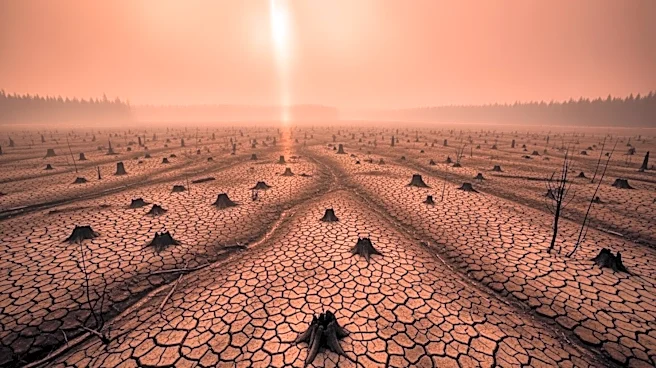
The wildfires highlight the increasing vulnerability of regions to climate-induced disasters, exacerbated by human activities. The destruction of homes and land underscores the urgent need for improved fire management and prevention strategies. These events also stress the importance of addressing climate change impacts, as prolonged droughts and extreme weather conditions become more frequent. The fires' impact on local communities, ecosystems, and the economy is significant, prompting a reevaluation of emergency response and land management policies.
What's Next?
Efforts to contain the fires will continue, with firefighting teams utilizing both ground and aerial resources. The situation calls for enhanced collaboration between local, state, and federal agencies to manage and mitigate fire risks. Long-term strategies may include revising land use policies, increasing public awareness, and investing in fire-resistant infrastructure. Monitoring and research by agencies like NASA will play a crucial role in understanding fire dynamics and developing predictive tools to prevent future disasters.