




What's Happening?
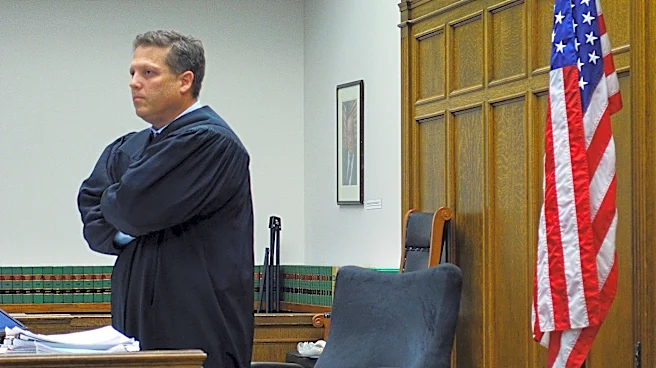
Roger Rogoff, a U.S. attorney appointed by a panel of judges, has filed a lawsuit against President Trump following his abrupt dismissal. Rogoff argues that his firing was illegal, as court-appointed U.S. attorneys should remain in their roles until a presidential
appointee is confirmed by the Senate. This legal challenge highlights a constitutional issue regarding the appointment and dismissal of U.S. attorneys, emphasizing the importance of the advice and consent clause. Rogoff's case is the first of its kind, although President Trump has previously dismissed other judicially appointed U.S. attorneys.
Why It's Important?
This case underscores the ongoing tensions between the executive branch and the judiciary over the appointment and dismissal of U.S. attorneys. The outcome could have significant implications for the balance of power and the rule of law in the United States. If Rogoff's challenge is successful, it may reinforce the constitutional requirement for Senate confirmation of presidential appointees, potentially limiting the president's ability to unilaterally dismiss court-appointed officials. This case also raises broader questions about the independence of the judiciary and the potential politicization of legal appointments.
What's Next?
The lawsuit will proceed through the courts, with potential implications for the administration's approach to appointing and dismissing U.S. attorneys. Legal experts and political observers will be closely monitoring the case, as it could set a precedent for future disputes over judicial appointments. The administration may face increased scrutiny over its adherence to constitutional processes, and the case could prompt legislative or judicial action to clarify the rules governing the appointment and dismissal of U.S. attorneys.