




What's Happening?
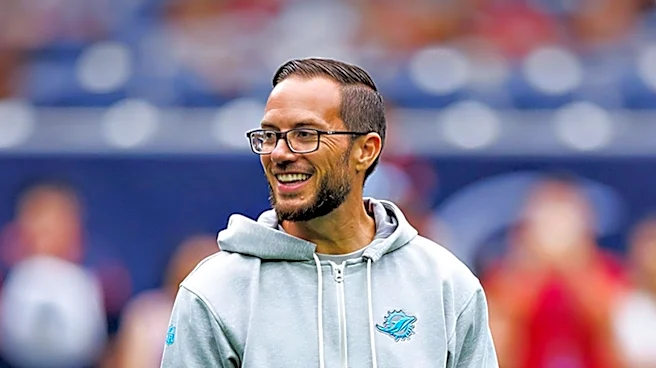
A wedding photo of NFL coach Mike McDaniel's parents from the 1980s has unexpectedly gone viral on Twitter, accumulating over a million views. The image, shared by a user with the caption 'NFL Coach Mike McDaniel's parents' wedding photo is just...wow,'
quickly garnered thousands of likes and shares. Many users praised the couple's 'old-school style' and 'infectious joy,' with some fans of Mike McDaniel viewing it as a reminder of his 'humble beginnings' and personal struggles. However, the photo's widespread circulation has also ignited discussions about the nature of celebrity, the public's fascination with celebrity families, and how social media can both elevate and distort reality. Critics have questioned the appropriateness of sharing such personal family moments, suggesting it could be a way to sensationalize McDaniel's private life for public consumption.
Why It's Important?
This viral phenomenon highlights the evolving dynamics between public figures, their private lives, and the pervasive influence of social media. The internet's rapid dissemination of personal images, even those from decades past, demonstrates how easily private moments can become public spectacles, often without the subjects' direct consent or control. For public figures like Mike McDaniel, this raises questions about the boundaries of privacy for their families. The public's enthusiastic engagement with the photo also underscores a broader societal trend of 'parasocial interaction,' where individuals form emotional connections with celebrities through media consumption. This desire for a 'deeper connection' can lead to a blurring of reality and fantasy, as fans feel a sense of intimacy with figures they don't personally know. The incident serves as a case study in how social media platforms can amplify personal narratives, sometimes creating a 'distorted sense of reality' where shared images are consumed and re-shared without critical consideration of their context or implications.
What's Next?
The ongoing virality of Mike McDaniel's parents' wedding photo is likely to continue fueling discussions about celebrity privacy and the ethical considerations of sharing personal content on social media. As more personal images of public figures' families emerge online, there may be increased scrutiny from media ethicists and privacy advocates regarding the impact on individuals and their families. This event could prompt further conversations within the sports and entertainment industries about how to navigate the public's insatiable appetite for personal details while protecting the privacy of those associated with public figures. Social media platforms might also face renewed pressure to address content moderation policies related to personal images, particularly when they become viral sensations without clear consent. The incident may also lead to a more nuanced understanding among the public about the potential consequences of engaging with and sharing such content, encouraging a more critical approach to online interactions.
Beyond the Headlines
The viral spread of Mike McDaniel's parents' wedding photo delves into deeper societal implications concerning the commodification of personal lives in the digital age. It exposes the ethical tightrope walked by social media users and platforms alike, where the pursuit of engagement often overshadows considerations of privacy and authenticity. The phenomenon of 'parasocial interaction' is amplified, creating a false sense of intimacy between the public and celebrity families, which can lead to unrealistic expectations and a distorted view of reality. This incident prompts reflection on how our collective fascination with celebrity 'roots' and 'humble beginnings' can inadvertently contribute to the erosion of personal boundaries. It also highlights the long-term shifts in how personal histories are preserved and consumed, moving from private family albums to globally accessible digital archives, often without the original intent or context. The case underscores the need for a more conscious approach to digital sharing and consumption, recognizing the potential for even seemingly innocuous content to have far-reaching ethical and psychological impacts.