






What's Happening?
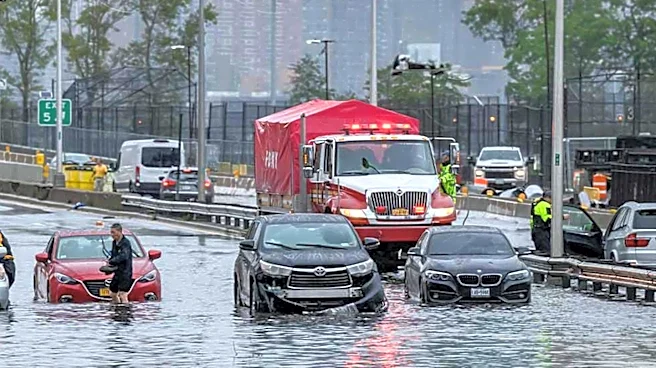
Severe thunderstorms on Thursday night led to significant flooding, property damage, and travel disruptions across New York City's five boroughs. Flash flooding was particularly severe in Hollis, Queens, around 183rd Street, where roads were inundated
with water. Residents in this area have expressed a desire for the city to consider home buyouts as a long-term solution to recurring flooding issues. LaGuardia Airport temporarily shut down for several hours, reopening Friday morning, and recorded over 210 flight cancellations. John F. Kennedy International Airport also experienced 167 cancellations. The National Weather Service reported that several parts of the city received more than 2 inches of rain, with Central Park recording 2.31 inches and LaGuardia 2.25 inches. A tornado warning was issued for southeast Queens, and a waterspout was observed in Jamaica Bay, with the National Weather Service planning to survey the area to confirm if a tornado occurred. Additionally, a fallen tree was reported in Bushwick, and water rushed down stairs at the 137th Street 1 train station in Manhattan.
Why It's Important?
The widespread flooding and damage underscore the increasing vulnerability of urban infrastructure to severe weather events, highlighting the urgent need for enhanced climate resilience measures in major U.S. cities. The disruption to air travel at two of the nation's busiest airports, LaGuardia and JFK, demonstrates the significant economic and logistical impact such storms can have on national transportation networks and commerce. The calls from Hollis, Queens residents for home buyouts reflect a growing public demand for more drastic and permanent solutions to protect communities repeatedly affected by climate-related disasters, potentially setting a precedent for other vulnerable areas. This situation also brings to light the financial burden on homeowners and businesses, as well as the operational challenges faced by emergency services and city management in responding to and mitigating the effects of these events. The incident emphasizes the broader implications of climate change on urban planning, public safety, and the daily lives of millions of Americans.
What's Next?
The National Weather Service will conduct a survey in southeast Queens to determine if a tornado touched down, which could lead to further assessments of damage and potential aid. City officials and community leaders, particularly in areas like Hollis, Queens, are expected to continue discussions regarding long-term solutions to recurrent flooding, including the possibility of home buyouts. This could involve policy reviews, funding allocations for infrastructure improvements, and community engagement to develop sustainable strategies. LaGuardia Airport and JFK International Airport will likely continue to manage residual flight delays and cancellations as they recover from the storm's impact. The incident may also prompt further investment in climate-resilient mass transit infrastructure, as advocated by City Council Member Shaun Abreu, to prevent future disruptions. Emergency management agencies will continue to monitor weather patterns and prepare for potential future severe weather events, emphasizing public awareness and preparedness.
Beyond the Headlines
The repeated severe weather events and their impact on New York City highlight a critical national challenge: adapting urban environments to the realities of a changing climate. The discussion around home buyouts in Hollis, Queens, points to a deeper societal question about the long-term habitability of certain areas and the ethical considerations of relocating communities due to environmental factors. This could lead to broader policy debates on managed retreat and climate migration within the U.S., impacting property values, community structures, and local economies. The strain on infrastructure, from airports to subway systems, reveals the interconnectedness of urban services and the cascading effects of disruptions. Furthermore, the events underscore the disparities in climate resilience, as some communities may be more vulnerable due to socioeconomic factors or historical underinvestment in infrastructure. This situation could accelerate the push for innovative urban planning and green infrastructure solutions to protect cities from future climate impacts.