





What's Happening?
Scientists at the University of California, San Francisco, have developed a new brain-computer interface (BCI) that allows paralyzed patients to communicate through both speech and upper-body gestures simultaneously via a virtual avatar. This BCI is the first
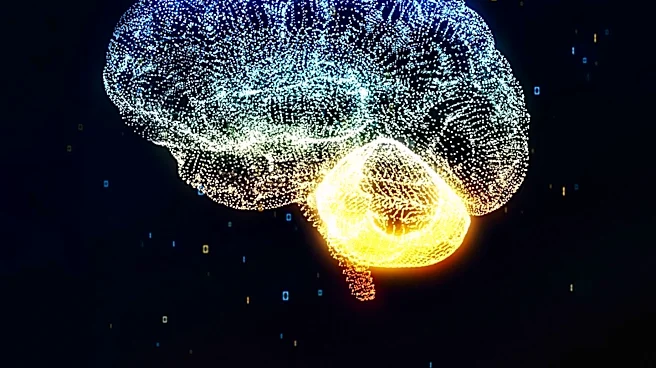
of its kind to enable both speech and movement activities in a single device. Previous technologies could only facilitate one or the other. The system works by recording brain activity from patients with paralysis using electrodes implanted on the brain's surface as they attempt to speak, make gestures, or do both. Machine learning models then translate this brain activity into attempted phrases or body movements. A personalized, full-body avatar, created using the Unreal Engine video game development platform, performs the decoded speech and gestures in real time. This dual decoding capability allows participants to use speech alone, a gesture alone, or both simultaneously, offering a more natural and expressive form of communication.
Why It's Important?
This advancement is crucial for individuals suffering from severe paralysis due to conditions like stroke or neurodegenerative diseases such as motor neurone disease, which often impair both speech and movement. The ability to combine speech and gestures through a virtual avatar could significantly enhance their capacity for expressive interaction, moving beyond the limitations of previous BCI systems that addressed speech or movement in isolation. Natural communication inherently involves both verbal and non-verbal cues, including facial expressions and manual gestures. By restoring this multi-modal communication, the new BCI offers a pathway to more flexible and nuanced interactions, potentially improving the quality of life and social engagement for patients who have lost these fundamental abilities. This technology represents a significant step towards restoring a more complete form of human communication for those with severe bodily and vocal-tract paralysis.
What's Next?
While this BCI represents a significant proof of concept, researchers acknowledge that further testing is required before it can be widely used by patients. Future steps include testing the technology in more participants and with larger sets of words and gestures to ensure its reliability and versatility. The scientists also hope to develop a fully implantable, wireless version of the device for long-term use, which would enhance convenience and reduce the risk of infection associated with external components. The goal is to refine the system to provide even more flexible and expressive communication options for individuals with paralysis, ultimately aiming for a seamless and intuitive user experience that closely mimics natural human interaction.
Beyond the Headlines
The development of this multi-effector BCI has profound implications beyond immediate communication restoration. It challenges previous assumptions about how the brain processes speech and movement, revealing that the brain works differently when these actions are performed together compared to when they are done separately. This deeper understanding of neural pathways could lead to new insights into brain function and potentially inspire novel therapeutic approaches for various neurological conditions. Ethically, the creation of personalized avatars raises questions about identity and self-representation in a digital space, offering patients a new way to project their personality and agency. The integration of video game technology like Unreal Engine also highlights a growing trend of interdisciplinary collaboration, where advancements in seemingly unrelated fields converge to solve complex medical challenges, pushing the boundaries of what is possible in assistive technology.