



What's Happening?
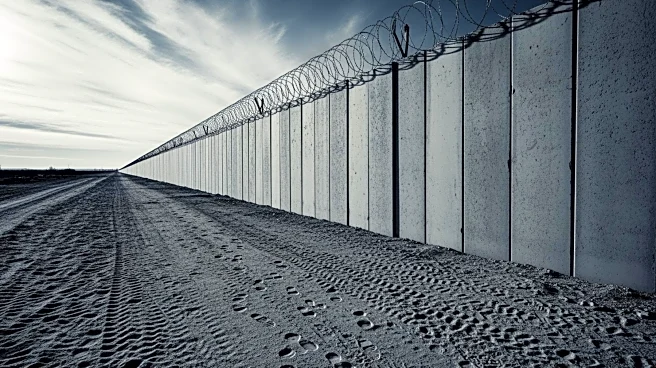
The Israeli Defense Forces (IDF) have raised concerns over the security risks posed by tens of thousands of Palestinians crossing the West Bank barrier into Israel. Despite efforts to maintain a hermetic cordon around the West Bank town of Qabatiya, breaches
in the barrier have allowed significant numbers of Palestinians to enter Israel illegally. This situation has been exacerbated by the ongoing conflict in Gaza, which has diverted attention and stretched Israeli forces. The IDF has deployed 23 battalions and reinforced Border Police along the seam line to address the issue, but the sheer number of breaches makes it difficult to control. The Israeli economy's dependence on Palestinian labor is a factor in the decision to maintain the current situation, as these workers contribute to industrial peace by providing income to their families.
Why It's Important?
The illegal crossings pose a significant security threat to Israel, with the potential for increased terrorist activities. The IDF's concerns are heightened by the possibility of a coordinated eruption of violence across the West Bank, which could involve tens of thousands of terrorists. The situation also highlights the complex relationship between Israel and the Palestinian territories, where economic dependencies and security concerns are intertwined. The reliance on Palestinian labor underscores the challenges faced by the Israeli economy, which benefits from the lower wages paid to these workers. The ongoing breaches in the barrier could lead to further instability and necessitate more stringent security measures, impacting both Israeli and Palestinian communities.
What's Next?
The Israeli government and military may need to reassess their strategies for managing the security barrier and controlling illegal crossings. This could involve increased funding to seal breaches and enhance technological systems for early warning capabilities. The IDF may also consider adjusting rules of engagement to deter illegal crossings more effectively. Additionally, there may be discussions on the broader implications of the current policy, including its impact on Israeli-Palestinian relations and the potential need for diplomatic solutions to address underlying issues.