





What's Happening?
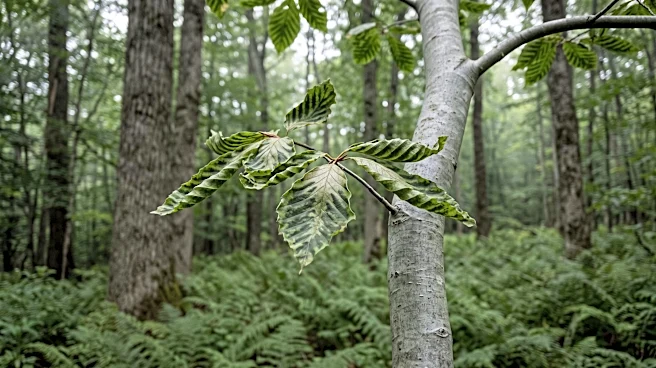
A rock climber, Bill Widrig, a volunteer with the Adirondack Park Invasive Plant Program’s (APIPP) Forest Pest Hunters program, has discovered a case of beech leaf disease (BLD) on Goodman Mountain, south of Tupper Lake in the Adirondacks. Widrig identified
leaf banding, a characteristic sign of BLD, while climbing a rock wall. This discovery is significant because the disease, which is caused by an invasive nematode, typically does not spread this far north at this time of year. The closest previously known infestation was 45 miles south along the Boreas River, near Newcomb. BLD is a deadly infestation capable of killing healthy beech trees within 10 years. The first confirmed case of BLD in the Adirondacks was in 2022. APIPP trains volunteers annually to identify and report BLD, which helps in understanding its movement and informing management strategies.
Why It's Important?
The discovery of beech leaf disease in a new, more northern location within the Adirondacks highlights the rapid and aggressive spread of this invasive pest. This accelerated rate of spread poses a significant threat to the beech tree population in the region, which is a foundational species in many forest ecosystems. The loss of beech trees can have cascading effects on local wildlife that depend on them for food and habitat, altering the ecological balance of the Adirondack Park. Furthermore, the economic impact on forestry and tourism, particularly for those who appreciate the natural beauty of the Adirondack forests, could be substantial. The involvement of citizen scientists like Bill Widrig underscores the critical role of public participation in early detection and monitoring efforts, which are crucial for developing effective management and prevention strategies against invasive species.
What's Next?
Following this discovery, APIPP will likely intensify its monitoring efforts in the newly affected area and surrounding regions to assess the full extent of the infestation. Researchers and forest managers will need to update their models for BLD spread and re-evaluate current prevention and management strategies. There may be increased calls for public awareness and volunteer participation in the Forest Pest Hunters program to aid in early detection across a wider geographical area. Efforts to understand the specific pathways of this rapid northern spread will be critical, potentially leading to new guidelines for recreational users and land managers to prevent further human-assisted dispersal of the nematode. The long-term focus will be on developing sustainable solutions to mitigate the impact of BLD and protect the remaining healthy beech tree populations.
Beyond the Headlines
The rapid spread of beech leaf disease, as evidenced by this new discovery, points to a broader challenge in managing invasive species in an interconnected world. The ability of such diseases to quickly traverse significant distances, potentially aided by environmental factors or human activity, underscores the vulnerability of natural ecosystems. This situation highlights the ethical responsibility of individuals and organizations to be vigilant and proactive in preventing the introduction and spread of invasive pests. It also brings into focus the long-term ecological shifts that could occur if keystone species like the beech tree are severely impacted, potentially leading to changes in forest composition, biodiversity, and ecosystem services. The reliance on volunteer programs like APIPP's Forest Pest Hunters also emphasizes the importance of community engagement and citizen science in addressing complex environmental threats that government agencies alone cannot fully manage.