

What's Happening?
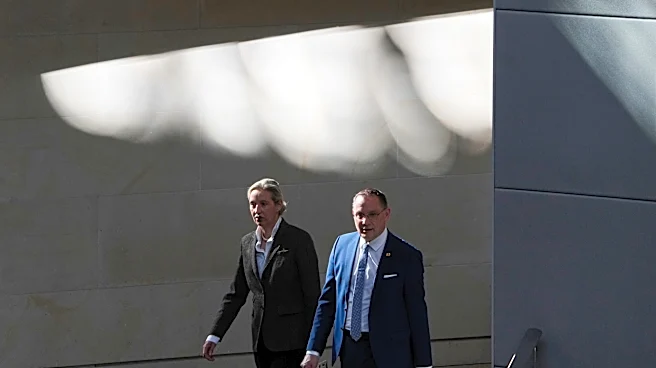
The far-right Alternative for Germany (AfD) party held its national convention in Erfurt, where delegates overwhelmingly reelected Alice Weidel and Tino Chrupalla as co-leaders. Weidel secured 81% of the vote, while Chrupalla received 70%. The convention was
marked by significant protests, with tens of thousands of demonstrators clashing with police outside the venue. The protests highlighted the divisive nature of the AfD, which has become the largest opposition party in Germany and the strongest political force in the country's former communist east. The timing of the convention coincided with the 100-year anniversary of a Nazi Party meeting, drawing criticism from historians and political opponents, though the AfD dismissed these concerns.
Why It's Important?
The reelection of Weidel and Chrupalla underscores the growing influence of the AfD in German politics, particularly in the eastern regions. The party's rise reflects broader trends of right-wing populism gaining traction in Europe, posing challenges to traditional political structures. The protests against the AfD highlight the societal tensions and resistance to far-right ideologies. The party's stance on issues such as migration and its support for lifting sanctions against Russia align with broader geopolitical shifts, including the policies of President Trump. The AfD's increasing popularity could impact Germany's political landscape, potentially influencing policy decisions and international relations.
What's Next?
The AfD is eyeing a significant victory in the upcoming state election in Saxony-Anhalt, where it hopes to secure 40% or more of the vote. Such a result could position the party to govern alone or form alliances, potentially leading to its first state governor. The party's success in regional elections could embolden its national ambitions and further challenge the mainstream political parties' 'firewall' strategy against far-right collaboration. The outcome of the legal challenge regarding the party's classification as a right-wing extremist group by Germany's domestic intelligence agency could also influence its future trajectory.
Beyond the Headlines
The AfD's rise raises questions about the resilience of democratic institutions in the face of populist movements. The party's rhetoric and policies, which echo elements of President Trump's platform, suggest a potential shift in Germany's political culture towards more nationalist and isolationist policies. The protests against the AfD reflect a broader societal debate about the values and direction of German society, with implications for social cohesion and the country's role in the European Union. The party's stance on international issues, such as its opposition to sanctions on Russia, could also affect Germany's foreign policy and its relationships with key allies.