







What's Happening?
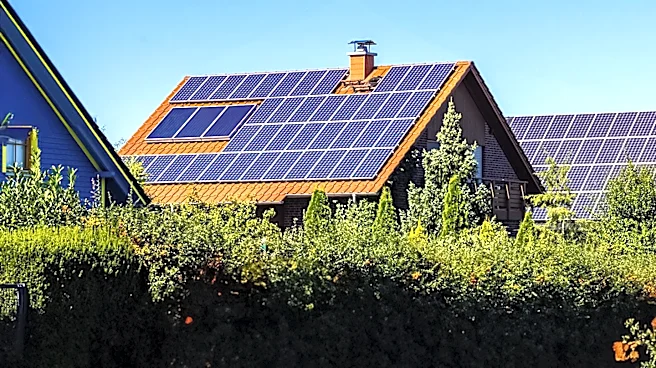
A West Virginia homeowner has reported several unexpected benefits from their rooftop solar panel installation, beyond the primary function of generating electricity. After one year with the system, the homeowner shared their observations on Reddit's
r/SolarDIY community. The solar array, which covers over half of the rooftop, created shade and an air gap, contributing to a cooler attic. This cooling effect resulted in a reduction of approximately 1.7 megawatt-hours in electricity consumption for air conditioning over five summer months, averaging about 10 kilowatt-hours per day. This saving occurred despite a warmer-than-average summer, and the homeowner noted they kept their house cooler than before the installation. Additionally, the solar system's monitoring capabilities helped the homeowner identify a failing dehumidifier months earlier than they would have otherwise, due to an unexpected spike in usage during January and February.
Why It's Important?
This development highlights the multifaceted advantages of residential solar energy systems, extending beyond mere electricity generation to include passive home efficiency improvements and enhanced appliance monitoring. For U.S. homeowners, the potential for reduced air conditioning costs due to attic cooling presents a significant financial incentive, particularly in regions with hot climates. The ability of solar monitoring systems to detect anomalies in household appliance usage, such as a failing dehumidifier, can lead to earlier repairs, preventing further energy waste and potential damage. This broader utility of solar installations could accelerate adoption rates, as consumers recognize the added value in home management and energy conservation. It also underscores the evolving role of smart home technology integrated with renewable energy solutions, offering a more comprehensive approach to household energy efficiency.
What's Next?
The homeowner plans to continue monitoring the system's performance, particularly regarding the long-term cooling effects and how the panels might impact solar gain during colder months, although they heat with natural gas. The experience suggests that as solar technology advances and becomes more integrated with home energy management systems, similar unexpected benefits may become more common. This could lead to increased consumer demand for solar installations that offer comprehensive monitoring and efficiency improvements. For the solar industry, these anecdotal successes could be leveraged to market solar panels not just as electricity generators, but as integral components of a smart, energy-efficient home ecosystem. Further research into the passive cooling effects of rooftop solar could also inform architectural design and urban planning strategies aimed at mitigating urban heat island effects.
Beyond the Headlines
The homeowner's experience points to a subtle but significant shift in how residential solar is perceived—from a standalone energy source to an integrated home infrastructure component. The passive cooling effect of the panels, creating an air gap and shade, suggests a potential for solar installations to contribute to building resilience against extreme weather events, a growing concern with climate change. Furthermore, the early detection of a failing appliance through energy monitoring highlights the increasing sophistication of smart home technology and its potential to empower homeowners with greater control and insight into their energy consumption. This integration of energy generation, consumption monitoring, and passive climate control could redefine the concept of a 'smart home,' emphasizing sustainability and efficiency as core tenets. It also raises questions about the potential for insurance companies or home warranty providers to offer incentives for such integrated systems, recognizing their role in preventing costly repairs and improving home longevity.