



What's Happening?
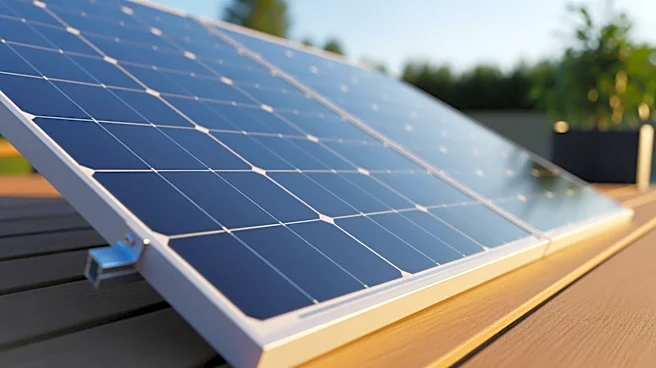
Virginia has become the third state in the United States to legalize plug & play solar systems, also known as 'balcony solar.' This development allows residents to install small-scale solar units on residential structures without facing municipal bans.
The new law, HB 395, permits these systems as long as they do not exceed 1.2kW, comply with zoning restrictions, and do not export power. The systems must adhere to the National Electrical Code and be certified by a recognized testing laboratory. This move is part of a broader effort to reduce barriers to residential solar adoption, which include permitting costs, wait times, and upfront expenses.
Why It's Important?
The legalization of plug & play solar in Virginia represents a significant step towards increasing residential solar adoption in the U.S. By removing municipal bans, the state is making it easier for homeowners to contribute to renewable energy goals. This could lead to increased energy independence and reduced reliance on traditional power sources. The decision also sets a precedent that other states might follow, potentially leading to a nationwide shift in residential solar policies. This could benefit the solar industry by expanding the market for small-scale solar products and encouraging innovation in solar technology.
What's Next?
As Virginia implements this new law, other states may observe the outcomes and consider similar legislation. The success of plug & play solar in Virginia could influence policymakers in other regions to adopt similar measures, potentially leading to a broader acceptance of residential solar solutions. Additionally, the solar industry might see increased investment and development of new products tailored to this emerging market. Stakeholders, including solar companies and environmental groups, are likely to advocate for similar policies in other states to further promote renewable energy adoption.