


What's Happening?
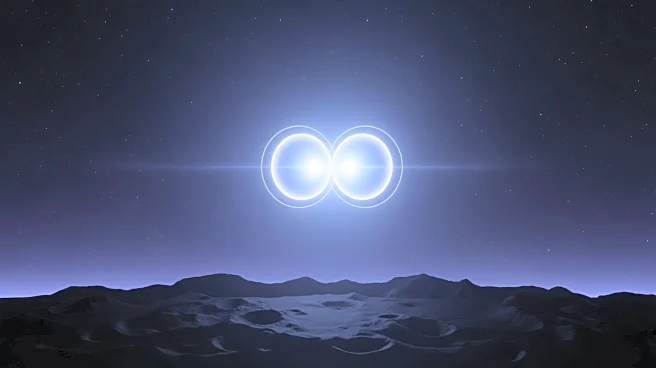
Astronomy enthusiasts have a unique opportunity to observe the dwarf planet Ceres as it forms a temporary optical double system with a background star. This celestial event is visible around 8 P.M. local time, with Ceres shining at 9th magnitude within
the constellation Cetus. The dwarf planet is located approximately 4.4° northeast of Iota Ceti and 2 arcminutes north of the 7th-magnitude star HD 3126. This alignment creates a rare visual effect, making Ceres appear as one component of a double star system for one night only. The event is part of a series of astronomical observations available this week, including the close approach of Comet Schaumasse to the Virgo Cluster.
Why It's Important?
This event is significant for both amateur and professional astronomers as it provides a rare chance to observe Ceres in a unique configuration. Such occurrences can enhance public interest in astronomy and provide educational opportunities for those interested in celestial phenomena. Observing Ceres in this context can also contribute to a better understanding of its orbit and characteristics. The event underscores the importance of celestial observation in expanding our knowledge of the solar system and engaging the public in scientific exploration.
What's Next?
Following this event, astronomers and sky watchers can look forward to other celestial phenomena, such as the ongoing visibility of Comet Schaumasse and the Ursid meteor shower. These events offer additional opportunities for observation and study, potentially leading to new discoveries or insights. The continued observation of Ceres and other celestial bodies will remain a priority for astronomers, contributing to ongoing research and public engagement in astronomy.
Beyond the Headlines
The observation of Ceres as part of a temporary double star system highlights the dynamic nature of our solar system and the importance of continuous monitoring of celestial bodies. This event may inspire further interest in the study of dwarf planets and their interactions with other celestial objects. It also emphasizes the role of amateur astronomers in contributing to scientific knowledge through observation and data collection.