

What's Happening?
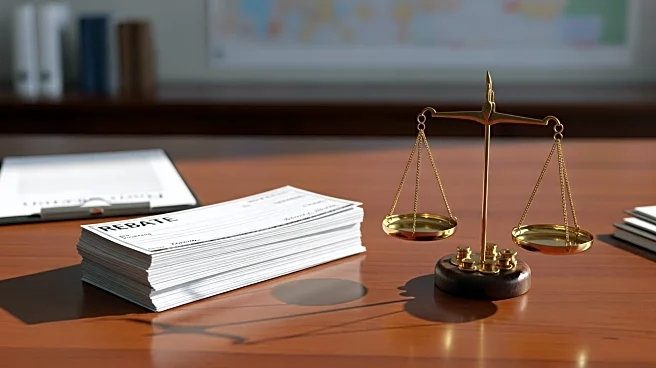
President Trump has announced plans to issue $2,000 rebate checks to lower- and middle-income Americans, funded by revenue from tariffs. The proposal, which Trump suggests may not require congressional approval, is contingent on the legality of the tariffs,
which is currently under review by the Supreme Court. The administration has not provided specific details on the timing, eligibility, or legal authority for these payments. White House economic adviser Kevin Hassett indicated that any such payments would likely require congressional appropriation. The proposal has garnered public support, with a survey indicating 52% of registered voters in favor of the rebate.
Why It's Important?
The proposed rebate checks could have significant economic implications, potentially increasing consumer spending and providing financial relief to many Americans. However, there are concerns about the feasibility of funding these payments solely through tariff revenue, as estimates suggest a substantial shortfall. Additionally, the plan could exacerbate inflationary pressures, as noted by Erica York from the Tax Foundation. The Supreme Court's decision on the legality of the tariffs will be crucial in determining the viability of the rebate checks, as a ruling against the tariffs could necessitate refunds and impact funding.
What's Next?
The Supreme Court's upcoming ruling on the legality of the tariffs will be a pivotal factor in the future of the rebate checks. If the court rules against the tariffs, the administration may need to explore alternative funding sources or abandon the proposal. The White House is exploring legal options to implement the plan, but congressional approval may ultimately be required. The outcome will likely influence public opinion and political dynamics, particularly in the context of ongoing debates about fiscal policy and economic management.