
What's Happening?
The BASE Lab at Southern Illinois University (SIU) Carbondale is actively engaged in research focused on applying artificial intelligence (AI) to agricultural challenges. Their work includes precision
livestock management, crop health monitoring, and yield prediction, aiming to improve efficiency and sustainability in agriculture. The lab's broader research encompasses computer vision, deep learning, and federated learning. Recent achievements include the acceptance of three papers at WACV 2027 workshops, covering topics such as weapon segmentation on CCTV, efficient neural networks, and stable scores in vision for neuro workshops. Additionally, a review paper on language-guided chest radiograph segmentation was published in the Journal of Imaging. The BASE Lab has also been featured on WSIL 3 Heartland News for its AI research supporting a deer density study with the Illinois Department of Natural Resources, where a PhD candidate is developing AI software to detect and count deer in thermal footage.
Why It's Important?
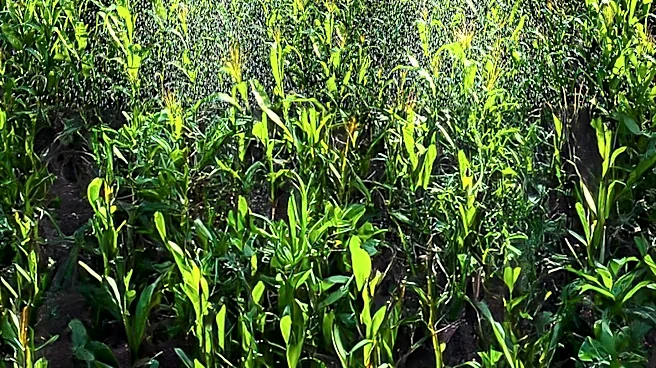
The advancements by the BASE Lab are significant for the U.S. agricultural sector, which constantly seeks innovative solutions to enhance productivity and sustainability. Precision livestock management, for instance, can lead to healthier animals, reduced resource consumption, and increased yields for farmers. Improved crop health monitoring and yield prediction can help optimize farming practices, minimize waste, and ensure food security. The development of AI software for wildlife management, as seen in the deer density study, offers a non-invasive and efficient method for ecological monitoring, which is crucial for biodiversity and resource conservation. These applications of AI can lead to substantial economic benefits for agricultural businesses and contribute to more resilient food systems across the nation.
What's Next?
The BASE Lab is actively seeking graduate research assistants for Spring 2027, indicating a continued expansion of their AI research in agriculture and related fields. Their ongoing work on computer vision and deep learning will likely lead to further innovations in automated visual understanding and complex problem-solving. The collaboration with the Illinois Department of Natural Resources suggests a continued focus on practical applications of AI for environmental and wildlife management. Future developments may include more sophisticated AI models for real-time agricultural decision-making, broader adoption of precision farming technologies, and continued contributions to academic research through publications and workshops, further solidifying SIU Carbondale's role in AI for agriculture.
Beyond the Headlines
The integration of AI into agriculture, as demonstrated by the BASE Lab, represents a broader shift towards data-driven decision-making in traditional industries. This trend raises important considerations regarding data privacy, the ethical use of AI in monitoring living organisms, and the potential impact on agricultural labor markets. While AI promises increased efficiency and sustainability, it also necessitates discussions about equitable access to these technologies for all farmers, regardless of scale. The development of AI for wildlife management also highlights the growing intersection of technology and environmental conservation, prompting questions about the balance between human intervention and natural processes, and the long-term ecological consequences of AI-driven monitoring and management strategies.