
What's Happening?
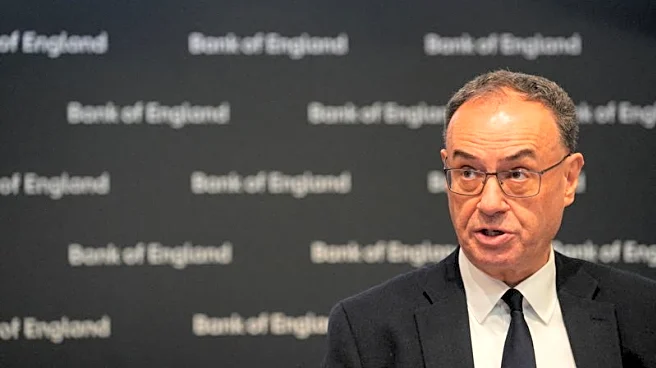
Bank of England Governor Andrew Bailey has issued a warning about the potential impact of artificial intelligence (AI) on the workforce in the UK. He highlighted concerns that AI could displace workers,
particularly affecting the pipeline of young talent in professional roles such as consultants, lawyers, and accountants. Bailey noted that while AI might boost productivity, it could also reduce demand for certain jobs, especially among young graduates. This warning comes amid a weakening labor market, with unemployment rising to 5.1% in recent months. Bailey emphasized the need for training and education to prepare workers for the changes AI might bring.
Why It's Important?
The potential displacement of workers by AI is significant as it could reshape the job market, particularly for young professionals. This shift may lead to fewer opportunities for career advancement in traditional roles, impacting economic stability and growth. The warning from the Bank of England's governor underscores the need for proactive measures, such as enhancing training programs, to ensure the workforce can adapt to technological changes. The broader implications include potential economic disruptions and the necessity for policy adjustments to support affected workers.
What's Next?
As AI continues to evolve, businesses and policymakers may need to focus on developing strategies to integrate AI into the workforce without causing significant job losses. This could involve investing in education and training programs to equip workers with the skills needed for AI-related roles. Additionally, monitoring the impact of AI on employment and productivity will be crucial to making informed decisions about future economic policies. Stakeholders, including government and industry leaders, may need to collaborate to address the challenges and opportunities presented by AI.