




What's Happening?
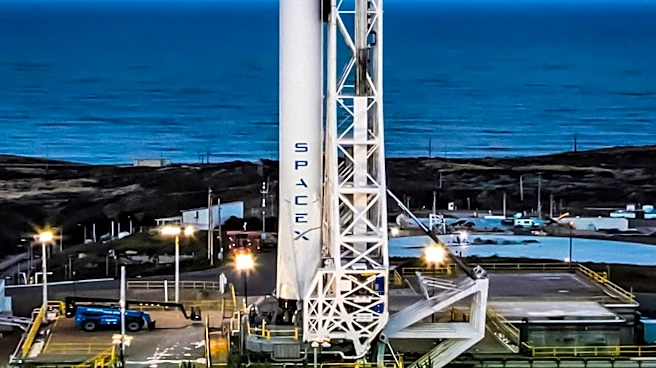
NASA has announced that the Roman Space Telescope, a new observatory expected to generate over 500 terabytes of cosmic data annually, has been fueled and is set for launch on August 30, 2026. This telescope, which will be launched aboard a SpaceX Falcon
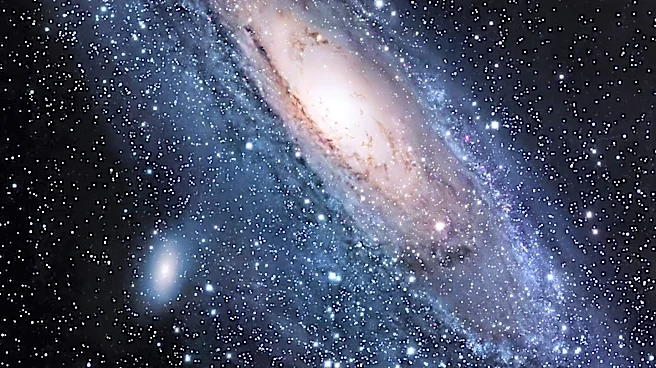
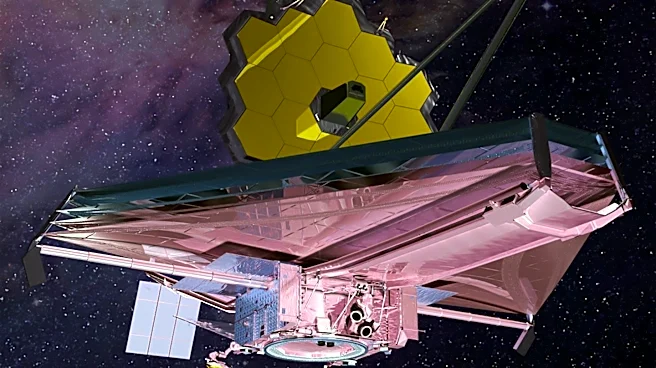
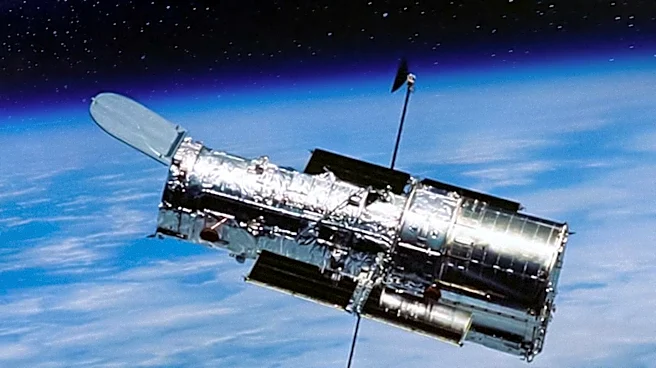
Heavy rocket, is nine months ahead of schedule and under budget. The Roman Space Telescope will complement existing telescopes like the Hubble and James Webb Space Telescopes by providing a wider field of view, allowing it to capture more extensive cosmic phenomena. The fueling process involved hydrazine, a highly efficient but toxic fuel, which is standard for NASA spacecraft. The telescope will be stationed at Lagrange point 2, a stable gravitational point about a million miles from Earth, where it will use its propellant to maintain its orbit and ensure its solar panels face the sun.
Why It's Important?
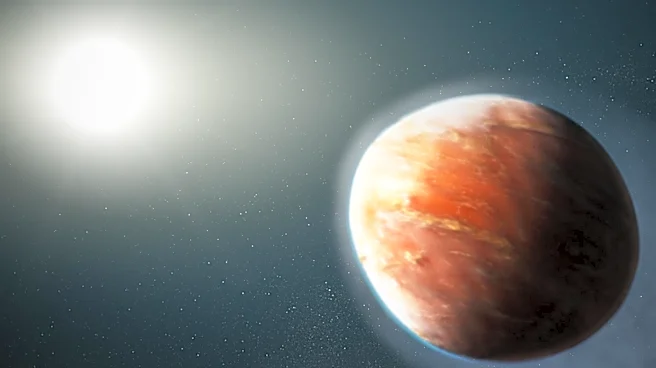
The Roman Space Telescope represents a significant advancement in space observation technology, promising to enhance our understanding of the universe. By generating more data than its predecessors, it will provide insights into dark matter, dark energy, supernova explosions, and the search for habitable exoplanets. This increased data capacity will support scientific research and potentially lead to groundbreaking discoveries in astronomy. The telescope's ability to capture a wider view of space will allow it to identify new targets for more detailed observation by other telescopes, thereby expanding the scope of cosmic exploration.
What's Next?
Following its launch, the Roman Space Telescope will travel to its designated position at Lagrange point 2. Once operational, it will begin its mission of data collection and observation, working in tandem with other telescopes to provide a comprehensive view of the universe. The scientific community anticipates that the data collected will lead to new discoveries and enhance our understanding of cosmic phenomena. The success of this mission could also influence future space exploration projects and the development of new technologies for space observation.