





What's Happening?
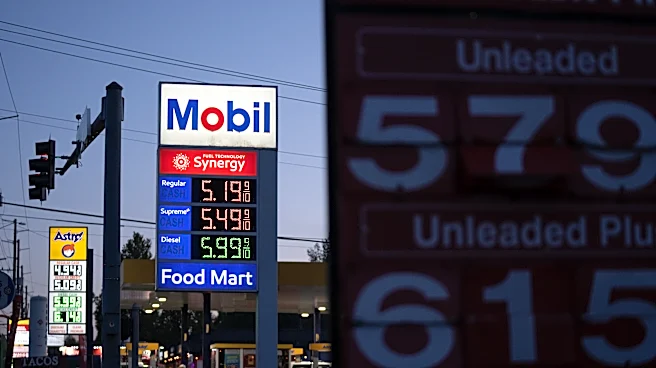
The U.S. economy is experiencing rising inflation and gas prices, influenced by the ongoing conflict with Iran. A key inflation measure rose significantly in March, driven by increased energy costs. Despite these challenges, consumer confidence has edged
higher, and unemployment claims have fallen to their lowest level in over 50 years. The U.S. economy grew at a 2% pace in the first quarter of 2026, recovering from a previous slowdown. However, the outlook remains uncertain due to the geopolitical tensions and their impact on global markets.
Why It's Important?
The rise in inflation and gas prices could strain household budgets and reduce disposable income, affecting consumer spending. This situation poses challenges for policymakers aiming to balance economic growth with inflation control. The conflict's impact on energy prices underscores the vulnerability of the U.S. economy to global geopolitical events. The resilience of consumer confidence and low unemployment levels provide some optimism, but the potential for prolonged inflationary pressures remains a concern.
What's Next?
Policymakers will need to monitor inflation trends closely and consider measures to mitigate the impact on consumers. The Federal Reserve's interest rate decisions will be critical in managing inflation expectations. The ongoing conflict may lead to further volatility in energy markets, affecting economic stability. Businesses and consumers may need to adapt to a changing economic environment, with potential shifts in spending and investment patterns.