



What's Happening?
Li Zhenguo, founder and chief technology officer of LONGi, has published an article in Nature Sustainability discussing the potential of photovoltaic (PV) technology to bolster global food security. The article emphasizes the vulnerability of traditional
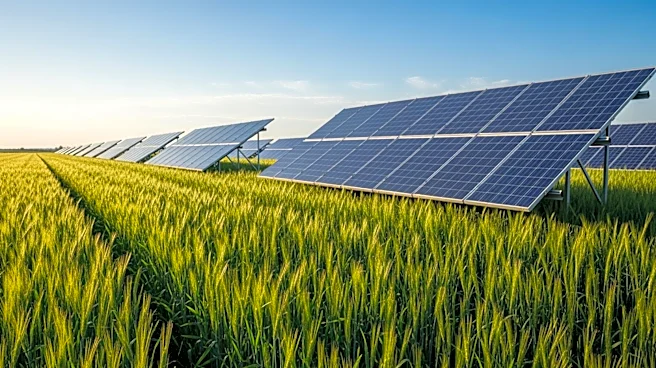
food production to climate change and extreme weather events. Li proposes two technological pathways where PV technology can enhance food supply resilience. The first involves using PV-generated electricity to synthesize starch from carbon dioxide, offering higher solar energy efficiency than natural photosynthesis. The second pathway suggests a synergistic 'energy-water-food' system, where PV systems in desert areas improve soil conditions and reduce irrigation needs. However, Li notes that these pathways require further research to assess their economic viability and ecological impacts.
Why It's Important?
The integration of PV technology into food production could significantly impact global food security, especially as climate change intensifies. By reducing dependency on natural photosynthesis, these innovations could stabilize food supplies and mitigate the effects of extreme weather on agriculture. This approach also aligns with global efforts to reduce carbon emissions and transition to sustainable energy sources. If successful, these technologies could transform arid regions into productive farmland, potentially alleviating food shortages and supporting sustainable development. However, the need for further research highlights the challenges in scaling these solutions and ensuring their environmental sustainability.
What's Next?
Further interdisciplinary research is needed to evaluate the large-scale economic viability and environmental impacts of these PV-driven food production pathways. This includes assessing the sustainability of water resource utilization and the long-term reliability of 'PV + agriculture' systems. As these technologies develop, they could attract interest from governments and industries seeking to enhance food security and reduce carbon footprints. The outcomes of this research could influence policy decisions and investment in renewable energy and agricultural innovation.