


What's Happening?
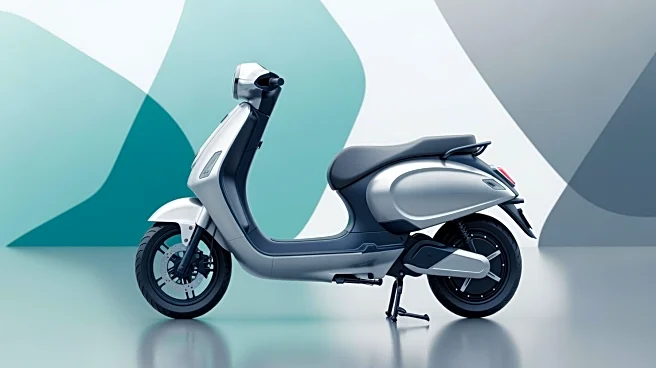
India's electric scooter market has experienced a significant transformation, moving from a phase of experimentation to full industrial scale. In 2025, the country saw over 1.27 million electric scooters and motorcycles sold, with monthly sales consistently
surpassing 100,000 units. This growth is not merely a result of temporary incentives but indicates a structural consolidation in one of the world's largest two-wheel mobility markets. Initially, companies like Ola Electric and Ather Energy led the market with innovative approaches and aggressive marketing. However, as electric scooters became essential for daily transportation, consumers began prioritizing reliability and service coverage over innovation. This shift has allowed legacy manufacturers like TVS Motor Company and Bajaj Auto to take the lead. TVS Motor Company, with its iQube model, sold approximately 298,000 units in 2025, while Bajaj Auto's Chetak model surpassed 260,000 units. These companies have leveraged their industrial strength and extensive distribution networks to gain a competitive edge.
Why It's Important?
The developments in India's electric scooter market have significant global implications. As one of the largest markets for scooters and motorcycles, India's transition to electric vehicles influences global battery supply chains, manufacturing priorities, and platform strategies. The success of legacy manufacturers in this market demonstrates that scale and trust can be as influential as innovation. This shift could serve as a model for other countries with large two-wheel vehicle markets, potentially accelerating the global transition to electric mobility. Additionally, the consolidation of the market by established manufacturers may lead to more stable and reliable electric vehicle offerings, which could further boost consumer confidence and adoption rates.
What's Next?
As the market continues to mature, it is likely that legacy manufacturers will further solidify their positions, potentially leading to increased investments in production capacity and technological advancements. Startups may need to adapt by focusing on niche markets or forming strategic partnerships with larger companies to remain competitive. The Indian government's policies and incentives will also play a crucial role in shaping the future of the electric scooter market. Internationally, other countries may look to India's experience as a case study for their own electric vehicle transitions, potentially leading to similar shifts in market dynamics.