





What's Happening?
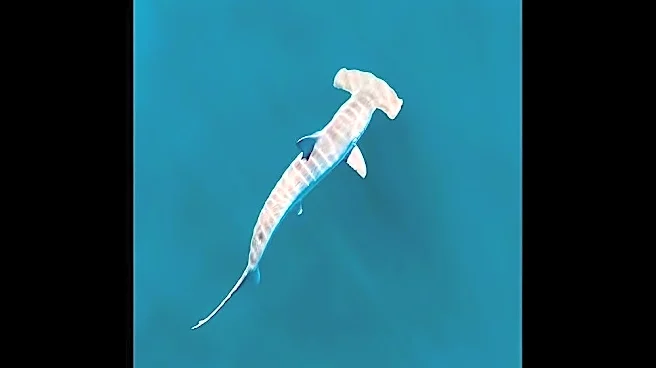
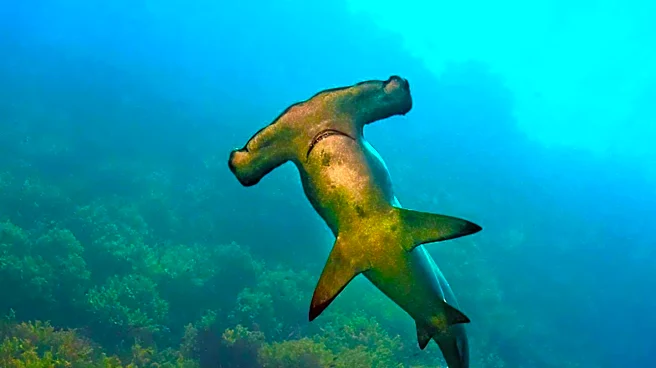
The Atlantic Shark Institute (ASI) recently made a significant breakthrough by tagging a hammerhead shark off the coast of Rhode Island. Initially, the ASI team set out to tag sandbar sharks, which are commonly found in the region during the summer months.
However, during their expedition, they encountered a scalloped hammerhead shark, a rare sight in New England waters. Although the first attempt to tag the scalloped hammerhead was unsuccessful, the team later managed to tag a smooth hammerhead. This event marks the first time a hammerhead shark has been tagged in Rhode Island, allowing researchers to track its movements and gather valuable data on its migration patterns.
Why It's Important?
This tagging event is crucial as it provides new insights into the migration patterns of hammerhead sharks, which are typically associated with tropical waters near the Galapagos and Costa Rica. The presence of hammerheads in New England is indicative of changing climate conditions, which are altering marine species' migration routes. By tracking these sharks, researchers can better understand the impact of climate change on marine ecosystems and potentially predict future shifts in species distribution. This data is vital for conservation efforts and for understanding the broader ecological implications of climate change.
What's Next?
With the successful tagging of the smooth hammerhead, ASI plans to monitor the shark's movements over the coming years. This long-term data collection will help researchers understand how climate change is affecting shark migration and behavior. Additionally, as water temperatures continue to rise, it is expected that more hammerhead sightings will occur in New England, prompting further research and potentially leading to new conservation strategies to protect these species as they adapt to changing environments.