






What's Happening?
Douglas Murray has highlighted a concerning trend of resurfacing conspiracy theories surrounding the September 11, 2001, attacks, particularly as the 25th anniversary approaches. Murray notes that these debunked claims are gaining new prominence across
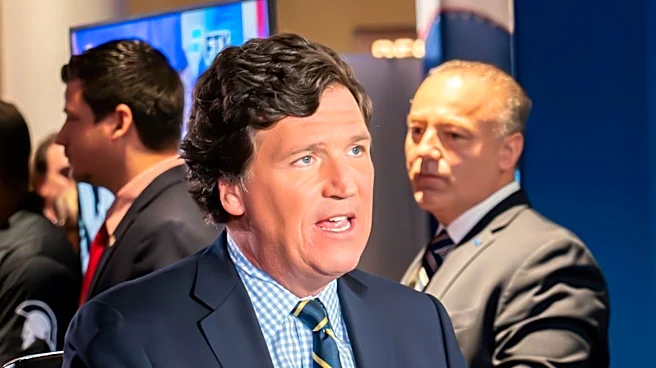
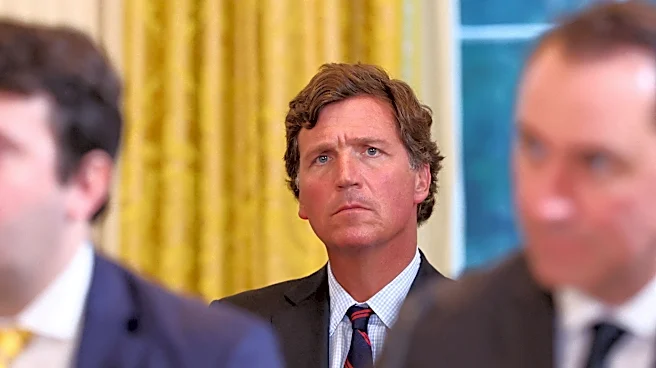
various political spectrums, including from the right, left, and Islamic extremists. A recent example cited is an interview conducted by Tucker Carlson with former congressman Curt Weldon. During this podcast, Weldon reiterated the discredited claim that Building 7 of the World Trade Center was brought down by the U.S. government in a controlled demolition. Weldon further escalated his claims, suggesting a broader conspiracy where the U.S. government might have planned an operation that would result in the deaths of 10,000 innocent Americans. Murray emphasizes the importance of refuting these conspiracies and clearly stating the truth about the attacks, especially for a new generation of adults who did not experience 9/11 firsthand and may be susceptible to misinformation.
Why It's Important?
The resurgence of 9/11 conspiracy theories, as discussed by Douglas Murray, is significant because it undermines historical truth and can have profound societal implications. For a generation that has grown up without direct memory of the attacks, these theories can distort their understanding of a pivotal moment in U.S. history. The propagation of such claims, especially by figures like former congressman Curt Weldon, lends a false sense of credibility to baseless narratives, potentially eroding public trust in institutions and established facts. This trend contributes to a broader 'war on truth,' where misinformation can sow division and confusion. The continued need to actively refute these conspiracies underscores the importance of historical education and critical thinking in maintaining a morally anchored society. Allowing these theories to proliferate unchallenged can also inadvertently serve the agendas of those who seek to destabilize or discredit the U.S. government and its actions.
What's Next?
In response to the growing prominence of 9/11 conspiracy theories, it is anticipated that efforts to counter misinformation will intensify, particularly as the 25th anniversary of the attacks draws near. This may involve increased educational initiatives aimed at informing younger generations about the factual events of 9/11. Experts and historians are likely to continue publishing articles, documentaries, and public statements to debunk false claims and reinforce the established narrative. Media outlets and public figures will face ongoing pressure to responsibly address and challenge conspiracy theories, rather than providing platforms for their dissemination without critical scrutiny. There may also be a renewed focus on digital literacy and media discernment to help individuals identify and reject misinformation. The ongoing debate highlights the persistent challenge of combating conspiracy theories in an era of widespread digital communication and the importance of upholding historical accuracy.
Beyond the Headlines
The phenomenon of 9/11 conspiracy theories, as highlighted by Douglas Murray, extends beyond mere historical revisionism; it touches upon deeper issues of collective memory, national identity, and the psychological need for alternative explanations in times of crisis. The appeal of such theories often lies in their ability to offer a seemingly simpler or more controlled narrative than the complex and often chaotic reality of events. This can be particularly attractive to those seeking to assign blame or find meaning in tragedy. Ethically, the promotion of debunked theories by public figures raises questions about their responsibility to truth and the potential harm caused by spreading misinformation. Culturally, the persistence of these narratives reflects a broader societal struggle with trust in authority and the fragmentation of shared realities. The 'war on truth' is not just about facts, but about the very fabric of how societies construct and maintain a common understanding of their past, which is crucial for navigating their future.