



What's Happening?
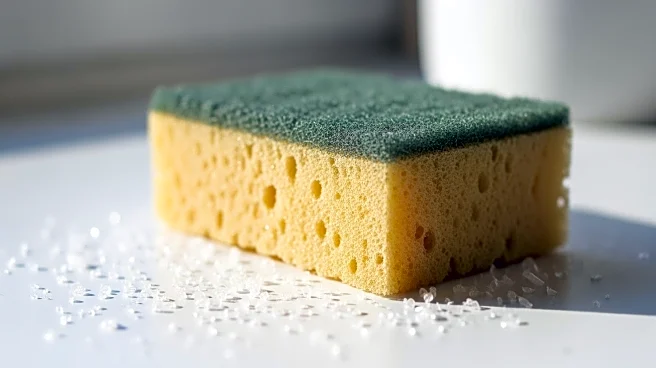
Researchers from the University of Bonn have conducted a study revealing that kitchen sponges release microplastics during regular use, contributing to environmental pollution. The study combined laboratory tests with real-world data from households in Germany
and North America, using different types of sponges. It was found that sponges release between 0.68 to 4.21 grams of microplastics per person annually. Despite this, the study concluded that water consumption during dishwashing poses a greater environmental burden than microplastic release. The research highlights the need for alternatives to reduce plastic use in household items.
Why It's Important?
The findings underscore the broader issue of microplastic pollution, which has been linked to health concerns such as cancer and infertility. While wastewater treatment plants capture a significant portion of these particles, some still enter aquatic environments, posing risks to ecosystems. The study suggests that reducing plastic use in household products and minimizing water consumption could mitigate these impacts. This research adds to the growing body of evidence on the environmental and health implications of microplastics, urging consumers and policymakers to consider sustainable alternatives.
What's Next?
The study's results may prompt further research into biodegradable alternatives for household products and encourage consumers to adopt more sustainable practices. Policymakers might also consider regulations to limit microplastic pollution and promote the use of eco-friendly materials. As awareness grows, there could be increased demand for plant-based, degradable sponges and other sustainable household items.