




What's Happening?
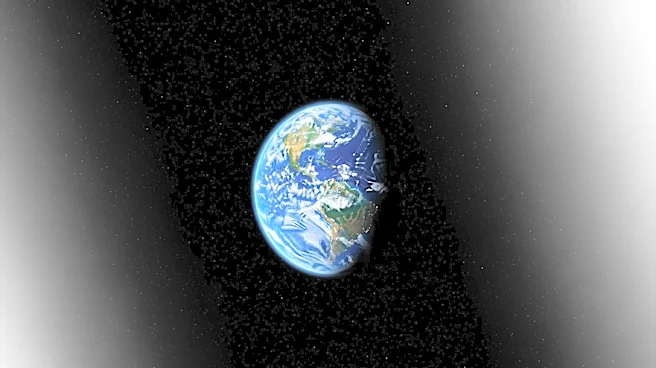
The Rare Earth hypothesis, proposed by Peter Ward and Donald Brownlee, suggests that Earth's unique conditions may make it an exceptionally rare host for complex life in the universe. This hypothesis argues that while microbial life might be common, the specific
conditions required for complex multicellular life are exceedingly rare. Factors such as Earth's galactic location, the presence of a large moon, and a protective gas giant like Jupiter contribute to this rarity. Recent studies in exoplanetary systems and galactic chemistry have strengthened this argument.
Why It's Important?
The Rare Earth hypothesis challenges the assumption that complex life is common in the universe, suggesting instead that Earth may be uniquely suited to support such life. This has profound implications for the search for extraterrestrial life, potentially shifting focus from finding civilizations to understanding the conditions that allow complex life to thrive. It also underscores the importance of preserving Earth's unique environment, as it may be one of the few places in the universe where complex life can exist.
Beyond the Headlines
The hypothesis raises ethical and philosophical questions about humanity's place in the universe. If Earth is indeed rare, it emphasizes the responsibility to protect and sustain our planet. It also challenges the notion of inevitable contact with extraterrestrial civilizations, suggesting that humanity may need to look inward for meaning and purpose. This perspective could influence future space exploration priorities and the allocation of resources toward understanding and preserving Earth's biosphere.