


What's Happening?
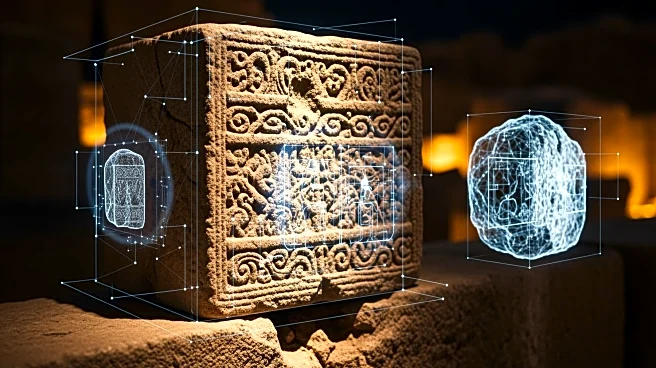
Recent advancements in 3D technology have led to the discovery of previously unseen graffiti in Pompeii, including a depiction of gladiators in combat and a love declaration. These findings were made possible through Reflectance Transformation Imaging
(RTI), a computational photography technique that reveals hidden surface details. Researchers from Sorbonne University and the University of Québec developed a 3D-image platform combining RTI data with photogrammetry and epigraphic metadata. This tool has enabled the visualization and digital annotation of graffiti, uncovering around 300 pieces, 79 of which were new discoveries. Among the notable findings is a drawing of gladiatorial combat, praised for its liveliness and expression of movement, and a partially preserved love inscription beginning with 'Erato loves...'. These discoveries provide a glimpse into the everyday life and imagination of ancient Pompeians.
Why It's Important?
The use of cutting-edge technology in archaeology is transforming our understanding of ancient civilizations. The newly discovered graffiti in Pompeii not only enriches the historical narrative of the site but also highlights the potential of digital tools in preserving cultural heritage. By capturing and archiving these ancient inscriptions, researchers are safeguarding them against further erosion and loss. This approach sets a precedent for future archaeological endeavors, emphasizing the importance of integrating technology in the study and conservation of historical sites. The findings also offer valuable insights into the social and cultural dynamics of Pompeii, shedding light on the personal expressions and artistic endeavors of its inhabitants.
What's Next?
The Archaeological Park of Pompeii plans to construct an overhead covering to protect the fragile plaster of the graffiti-laden corridor from environmental damage. This protective measure is part of a broader effort to preserve the 'memory of life lived in Pompeii,' as stated by Gabriel Zuchtriegel, the park's director. The continued use of technology in archaeological research is expected to uncover more hidden aspects of ancient sites, potentially leading to further discoveries. As these technologies evolve, they may offer new ways to engage the public with historical narratives, enhancing educational and cultural experiences.