

What's Happening?
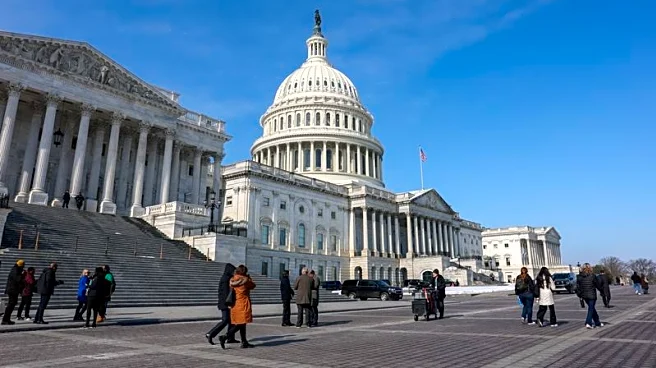
A recent incident involving Rep. Ro Khanna, a Democrat from California, has drawn significant attention after he mistakenly identified four innocent men as being connected to the Jeffrey Epstein case. During a congressional session, Khanna read out six
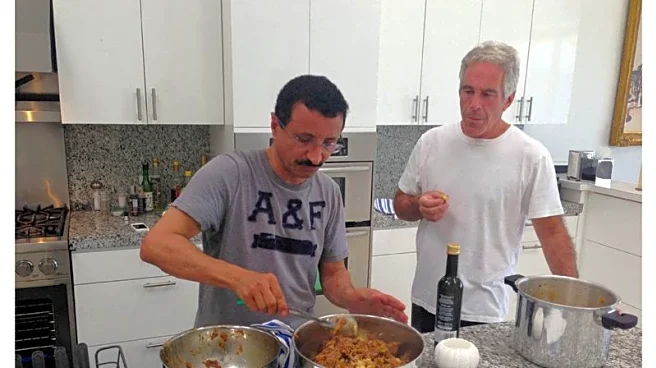
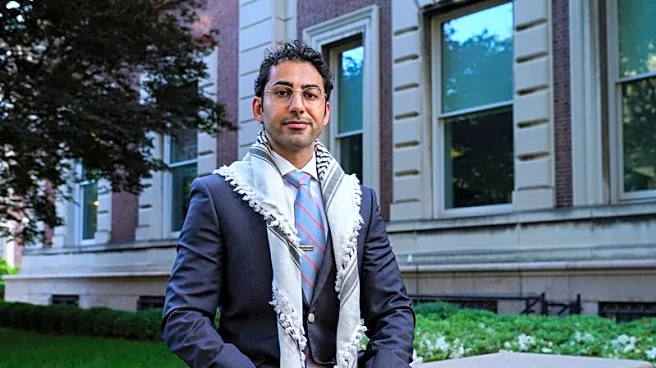
names he claimed were hidden by the Department of Justice (DoJ) in the Epstein files, suggesting they were 'wealthy, powerful men.' However, it was later revealed that four of these individuals had no connection to Epstein. The error occurred because these men were part of an FBI photo lineup from years ago. The Department of Justice criticized Khanna for this mistake, emphasizing that these individuals were unrelated to Epstein or his associate, Ghislaine Maxwell. The situation was further complicated by Kentucky Rep. Thomas Massie, who supported Khanna's claims. The incident has caused distress for those wrongly named, including Salvatore Nuarte from New York and IT manager Leonid Leonov, who have expressed their frustration and confusion over the situation.
Why It's Important?
This incident highlights the potential consequences of misidentification and the importance of accuracy in legal and political proceedings. The error not only caused personal distress for the individuals involved but also raised questions about the handling of sensitive information by lawmakers. It underscores the need for thorough verification processes before public disclosures, especially in high-profile cases like that of Jeffrey Epstein. The situation also reflects on the broader issue of transparency and accountability within the Department of Justice and among elected officials. The misstep could impact public trust in these institutions, as it suggests a lack of diligence in handling critical information. Furthermore, it may influence future legislative actions and discussions regarding the oversight of sensitive investigations.
What's Next?
In response to the backlash, Rep. Khanna has called for the Department of Justice to provide clearer explanations and to protect innocent individuals from being wrongly implicated. This incident may prompt a review of the processes used by lawmakers when accessing and disclosing sensitive information. It could also lead to discussions on improving the transparency and accountability of the DoJ in handling high-profile cases. Additionally, the affected individuals may seek legal recourse to clear their names and address the reputational damage caused by the error. The situation may also influence future legislative measures aimed at preventing similar incidents and ensuring the protection of individuals' rights in legal proceedings.