






What's Happening?
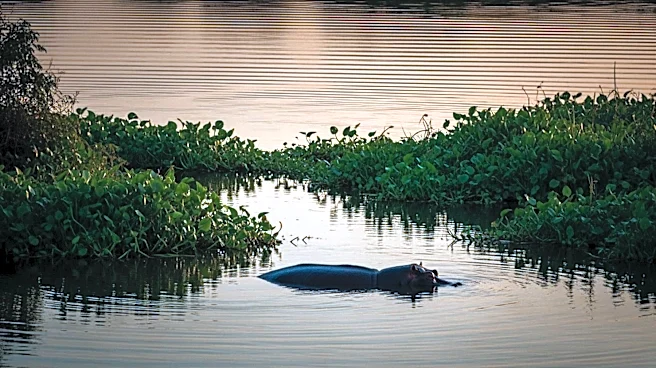
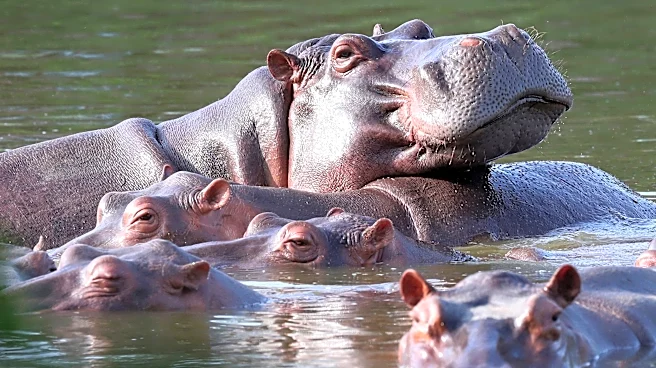
The Colombian government has authorized a plan to cull up to 80 hippos that are descendants of animals originally brought to the country by drug lord Pablo Escobar in the 1980s. These hippos, which have become a tourist attraction at the Nápoles ranch,
are now considered a threat to local ecosystems and communities. Environment Minister Irene Vélez announced the decision, citing the failure of previous methods such as sterilization and relocation to control the population. The hippos, which have multiplied rapidly due to Colombia's favorable environment, pose a danger to villagers and compete with native species like manatees for resources. Despite their popularity with tourists, the hippos' presence has become unsustainable, prompting the government to take this controversial step.
Why It's Important?
The decision to cull the hippos highlights the complex challenges of managing invasive species and balancing ecological preservation with economic interests. The hippos' rapid population growth threatens local biodiversity and poses safety risks to nearby communities. This action underscores the difficulties faced by countries dealing with non-native species introduced by human activity. The culling plan has sparked debate, with animal welfare activists opposing the move, arguing it sets a negative precedent for a nation recovering from internal conflict. The situation reflects broader environmental and ethical considerations in wildlife management, particularly in regions where tourism and conservation interests intersect.
What's Next?
The Colombian government has not specified when the culling will begin, but the decision is likely to prompt reactions from various stakeholders, including environmentalists, local communities, and the tourism industry. Authorities may face legal and public relations challenges as they implement the plan. The outcome could influence future policies on managing invasive species in Colombia and other countries facing similar issues. Additionally, the government may need to address the concerns of animal rights groups and explore alternative solutions to prevent further ecological disruption.
Beyond the Headlines
The culling of the hippos raises ethical questions about human responsibility for managing the consequences of past actions, such as the introduction of non-native species. It also highlights the tension between conservation efforts and economic interests, as the hippos have become a significant tourist attraction. The situation may prompt discussions on the role of tourism in conservation and the need for sustainable practices that protect both wildlife and local communities. Furthermore, the decision could influence Colombia's international reputation in environmental and wildlife management.