







What's Happening?
The 10th Circuit Court of Appeals has upheld a lower court's decision to dismiss a lawsuit filed by property owners in New Mexico, which sought to restrict public access to streambeds on private lands. The lawsuit, initiated by five property owners in San
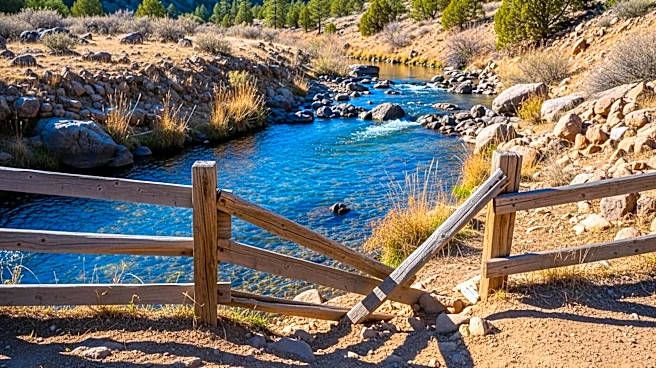
Miguel and Rio Arriba counties, claimed that the New Mexico Department of Justice and other agencies had illegally taken their property without providing 'just compensation' as required by federal law. The court's ruling supports New Mexico's constitutional protection of public waters, affirming the public's right to access streams and rivers. This decision follows a 2022 New Mexico Supreme Court ruling that recognized the public's right to recreate and fish in public waters, including the right to touch privately owned beds beneath those waters.
Why It's Important?
This ruling is significant as it reinforces the public's right to access natural resources, which has been a contentious issue in New Mexico. The decision is a victory for environmental and recreational groups who advocate for public access to waterways for activities such as fishing and kayaking. It also sets a precedent that could influence similar cases across the United States, where private landowners seek to limit public access to natural resources. The ruling underscores the balance between private property rights and public access, a critical issue in states with significant natural resources. The decision may impact landowners who have relied on historical interpretations of property rights to restrict access, potentially leading to changes in how land is managed and accessed in the future.
What's Next?
Following this ruling, it is likely that New Mexico officials will continue to enforce public access rights, potentially leading to further legal challenges from landowners. The decision may prompt other states to reevaluate their policies regarding public access to natural resources. Landowners affected by this ruling may seek legislative changes or further legal recourse to protect their property rights. Additionally, environmental and recreational groups may use this ruling to advocate for expanded access to other natural resources, potentially leading to broader policy discussions at the state and national levels.
Beyond the Headlines
The ruling highlights the ongoing debate over the interpretation of property rights versus public access rights. It raises questions about the extent to which private landowners can control access to natural resources that are deemed public under state constitutions. This case may influence future legal interpretations of 'judicial takings' and the compensation required when public access is granted over private lands. The decision also reflects broader societal values regarding the preservation and accessibility of natural resources for public use, which could lead to increased public engagement and advocacy in environmental policy.