


What's Happening?
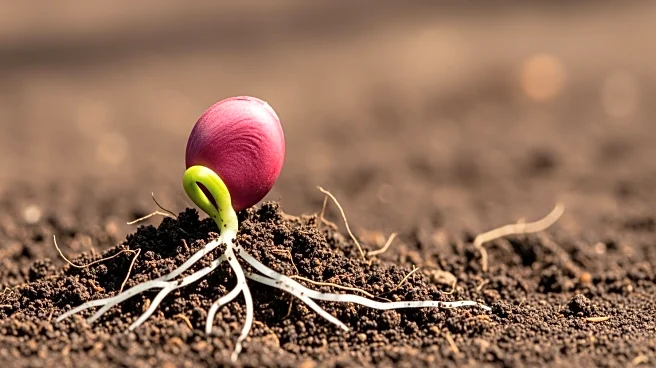
An experiment initiated in 1879 by scientist James Beal, involving the burial of seeds to study their longevity, continues to provide valuable insights into seed viability. The study, which involves unearthing bottles of seeds every few decades, aims
to understand how long seeds can remain viable underground. The latest findings suggest that some plant species can maintain their germination capacity for over a century under controlled conditions. This research is crucial for developing effective seed storage strategies and planning germplasm banks, especially in the context of climate change and food security.
Why It's Important?
The ongoing experiment is significant for its potential to inform agricultural practices and policies. Understanding seed longevity is vital for ensuring food security, particularly in the face of climate change and environmental challenges. The findings could lead to improved seed storage techniques and the establishment of germplasm banks, which are essential for preserving agricultural biodiversity. This research also highlights the importance of long-term scientific studies in addressing complex global issues such as food crises and environmental sustainability.
What's Next?
The experiment is set to continue until around 2100, with the next unearthing scheduled for 2040. Scientists will continue to monitor the viability of the seeds and apply the findings to modern agricultural practices. The results could influence global food security strategies and conservation efforts. As climate change continues to impact agriculture, the insights gained from this study will be increasingly valuable for developing resilient agricultural systems.