
What's Happening?
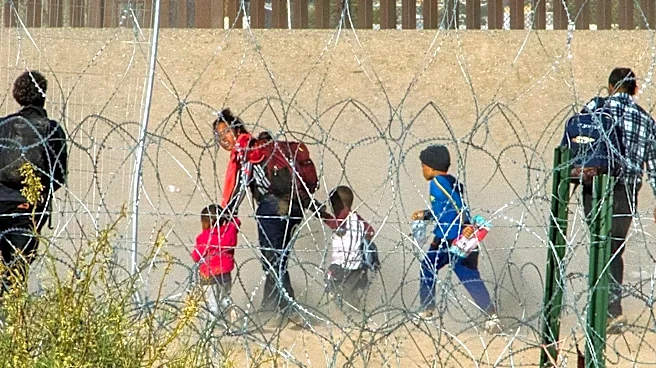
U.S. Immigration and Customs Enforcement (ICE) has significantly increased its arrest and deportation efforts, with daily arrests reaching 1,593 in early July. This surge follows a record 43,000 arrests in June,
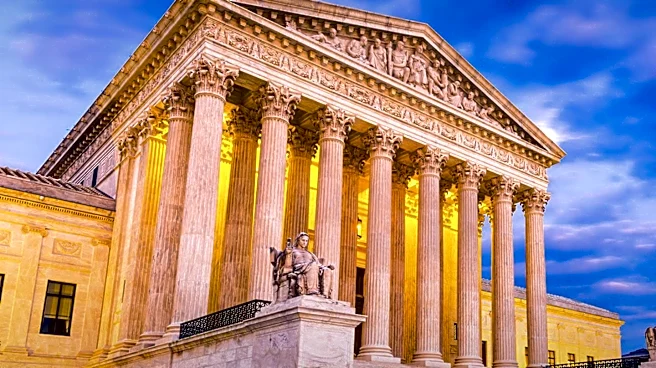
the highest under the Trump administration. The Department of Homeland Security claims these actions fulfill President Trump's promise to target serious criminals, although less than a third of detainees have criminal convictions. The policy has led to fatalities during enforcement traffic stops, prompting criticism. Despite a brief pause, President Trump has ordered the continuation of these stops, with ICE officers now required to wear body cameras. The U.S. Supreme Court is expected to rule on the legality of mandatory detention policies in its October term.
Why It's Important?
The intensified ICE operations highlight the ongoing debate over immigration enforcement in the U.S. While the administration argues these measures protect public safety, critics point out that many detainees lack criminal records, raising concerns about civil liberties and human rights. The fatalities during traffic stops have intensified scrutiny and criticism of ICE's methods. The Supreme Court's upcoming decision could have significant implications for immigration policy, potentially affecting thousands of immigrants and shaping future enforcement strategies. The situation underscores the broader national conversation about immigration reform and the balance between security and humanitarian considerations.
What's Next?
The Supreme Court's ruling on the legality of mandatory detention policies will be pivotal, potentially altering the landscape of U.S. immigration enforcement. If the court rules against the administration, it could lead to changes in detention practices and policies. Meanwhile, continued enforcement actions and the associated controversies are likely to fuel further political and public debate. Stakeholders, including immigrant advocacy groups and civil rights organizations, are expected to intensify their efforts to challenge and reform current policies.