



What's Happening?
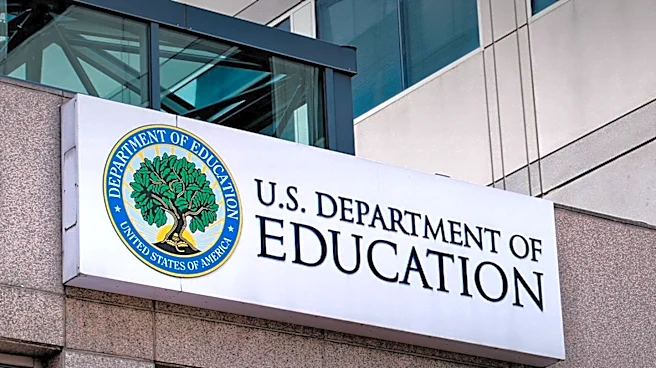
The American Association of University Professors (AAUP) and the American Federation of Teachers (AFT) have issued a joint letter to Education Secretary Linda McMahon, challenging the Education Department's recent 'Call to Action' for American colleges
and universities. This letter, sent by AAUP President Todd Wolfson and AFT President Randi Weingarten, criticizes the Trump administration's alleged use of federal power to influence educational institutions. The unions accuse the administration of weaponizing research funding to coerce colleges into adopting politically aligned policies. They highlight that both organizations have previously sued the administration over its education policy changes, asserting that the department's actions resemble 'authoritarian rule' rather than governance by law and democratic accountability. The letter from AAUP and AFT mirrors the structure of the Education Department's original 'Call to Action,' posing seven broad questions concerning transparency, free speech, academic freedom, student debt, academic standards, research integrity, and serving the American people over partisan agendas. They demand that Secretary McMahon provide a statement with 'concrete actions and timelines' in response to their questions and offer written assurance within 30 days that no college or university will face favorable or adverse federal treatment based on their response to the August 3 letter.
Why It's Important?
This confrontation between leading academic and teacher unions and the Education Department underscores a significant tension regarding the autonomy and funding of higher education in the U.S. The unions' accusations of the Trump administration 'weaponizing research funding' and acting with 'authoritarian rule' suggest a potential politicization of federal educational policy and funding. This could have far-reaching implications for academic freedom, research integrity, and the overall governance of universities. If federal funding becomes contingent on adherence to specific political agendas, it could stifle critical inquiry, limit diverse perspectives in research, and impact the financial stability of institutions that do not comply. The dispute also highlights concerns about the role of federal agencies in dictating educational reforms, potentially shifting power dynamics between the government and academic institutions. The outcome of this challenge could set precedents for how future administrations interact with and influence the higher education sector, affecting everything from curriculum development to research priorities and student support services.
What's Next?
The AAUP and AFT have demanded a response from Education Secretary Linda McMahon within 30 days, specifically requesting 'categorical written assurance that no college or university will receive favorable or adverse federal treatment' based on their response to the department's initial 'Call to Action.' They also expect a statement outlining 'concrete actions and timelines' in response to their own set of questions. The Trump administration has previously stated that colleges would not be penalized for their responses or lack thereof, but the unions' letter indicates a lack of trust in these assurances. The next steps will likely involve the Education Department's official response to the unions' demands, which could either de-escalate the situation or intensify the conflict. Further legal challenges from the AAUP and AFT are possible, given their history of suing the administration over education policy changes. This ongoing dialogue and potential legal battles will continue to shape the relationship between federal government and higher education institutions.
Beyond the Headlines
Beyond the immediate policy dispute, this situation touches upon fundamental questions about the independence of academic institutions and the potential for political interference in education. The unions' strong language, describing the administration's methods as 'authoritarian,' suggests a deeper concern about the erosion of democratic principles within the educational sphere. This conflict could lead to a re-evaluation of the balance of power between federal oversight and institutional autonomy, potentially sparking broader debates about the role of government in shaping academic discourse and research. The emphasis on 'safeguarding research integrity from political interference' and 'serving the American people rather than a partisan agenda' points to a struggle over the core values of higher education. The long-term implications could include a more formalized framework for protecting academic freedom and research funding from political pressures, or, conversely, a greater integration of political objectives into educational policy, with significant consequences for the future of U.S. universities.