











What's Happening?
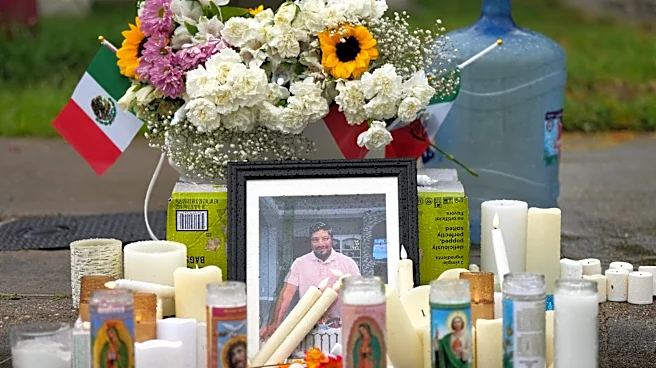
An ex-wife of David Brouillette, a U.S. Immigration and Customs Enforcement (ICE) agent, has filed for a protection from abuse order following his involvement in a shooting incident in Biddeford, Maine. Brouillette, who has a history of working in various
law enforcement roles in Maine, is accused of shooting Johan Sebastián Durán Guerrero. The ex-wife is seeking emergency sole custody of their 11-year-old daughter, citing concerns over Brouillette's alleged history of violence against former partners and children. The case has drawn attention from Democratic lawmakers who are questioning the Department of Homeland Security's vetting and training processes for immigration agents. Brouillette's past includes multiple legal disputes with his ex-wives, raising questions about his conduct and suitability for his role at ICE.
Why It's Important?
This case highlights significant concerns regarding the vetting and oversight of federal law enforcement officers, particularly those involved in sensitive roles such as immigration enforcement. The allegations against Brouillette, if proven, could indicate systemic issues within the Department of Homeland Security's hiring practices. The situation also underscores the potential risks faced by families of law enforcement officers accused of misconduct. The broader implications could affect public trust in federal agencies and prompt calls for reform in how agents are screened and monitored. Additionally, the case may influence public discourse on domestic violence and the legal protections available to victims.
What's Next?
A follow-up hearing is scheduled within 21 days to further assess the ex-wife's request for a protection order. This hearing will determine whether the allegations against Brouillette warrant legal intervention to protect his daughter and ex-wife. Meanwhile, state and federal investigations into the shooting incident are ongoing. The outcome of these investigations could lead to disciplinary actions against Brouillette and potentially influence policy changes within ICE and DHS. Lawmakers may also push for legislative reviews or reforms to address any identified gaps in the current system.