



What's Happening?
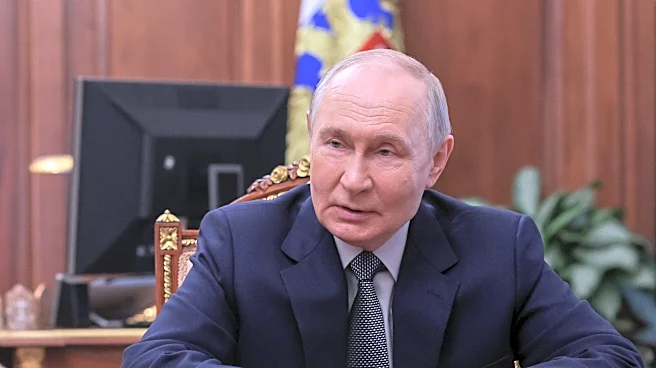
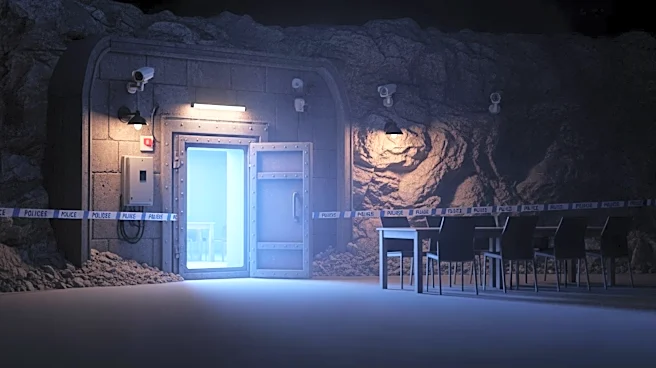
Vladimir Putin, the President of Russia, has reportedly been spending extended periods in bunkers due to fears of a coup from within his own ranks. According to a report citing a Western intelligence agency, Putin has retreated to these secure locations,
particularly near his Gelendzhik palace, amid concerns about potential drone attacks orchestrated by his inner circle. The report highlights heightened security measures around Putin, including restricted access to his usual residences and increased surveillance of his staff. These developments come in the wake of a tense meeting with top security officials, where accusations were exchanged over failures to protect high-ranking officials, following the assassination of Lt-Gen Fanil Sarvarov in Moscow. The situation underscores the growing paranoia and isolation of Putin as he navigates internal power struggles and external threats.
Why It's Important?
The increased security measures and Putin's retreat to bunkers signal significant instability within the Russian leadership. This development could have far-reaching implications for global politics, particularly in the context of the ongoing conflict in Ukraine. The internal power struggles and fears of a coup could weaken Putin's grip on power, potentially leading to shifts in Russian foreign policy. For the U.S. and its allies, this instability may present both challenges and opportunities in diplomatic and strategic engagements with Russia. Additionally, the heightened security measures and paranoia within the Kremlin could impact Russia's domestic policies and its interactions with the international community.
What's Next?
As the situation unfolds, it is likely that Putin will continue to implement stringent security protocols to safeguard his position. The Russian government may also intensify its efforts to control information and manage public perception through state media. Internationally, countries may need to reassess their diplomatic strategies in response to the potential for increased volatility within Russia. The U.S. and its allies will likely monitor the situation closely, considering the implications for regional security and the broader geopolitical landscape.