





What's Happening?
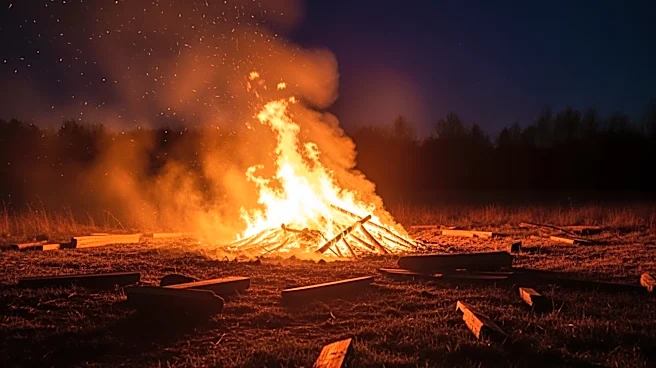
The annual celebration of Lag B'Omer in Israel, marked by numerous bonfires, has been identified as a significant environmental and health hazard. Satellite images reveal that the bonfires create a thick cloud of pollution, with air pollutant concentrations
rising significantly during the event. The Environmental Protection Ministry reports that pollutant levels on Lag B'Omer are seven to 20 times higher than on ordinary days. The bonfires, which often include burning materials like organic waste and plastics, release hazardous substances into the air, posing risks to public health and the environment.
Why It's Important?
The environmental and health implications of Lag B'Omer bonfires are considerable. The pollutants released during the celebrations can lead to respiratory issues and other health problems, particularly affecting vulnerable populations such as children. The event highlights the broader issue of open burning and its impact on air quality. The situation underscores the need for increased public awareness and the adoption of more sustainable practices. The health risks associated with the bonfires also raise questions about the balance between cultural traditions and environmental responsibility.
What's Next?
Efforts are underway to reduce the environmental impact of Lag B'Omer celebrations. The Environmental Protection Ministry and experts are advocating for alternative activities that do not involve open burning, such as lantern walks or social gatherings without fire. There is also a push to educate the public about the dangers of burning non-approved materials and the benefits of reducing the number and size of bonfires. These initiatives aim to protect public health and promote sustainability while preserving cultural traditions. The success of these efforts will depend on public cooperation and increased awareness of the environmental and health risks.