



What's Happening?
The City of Oklahoma City has issued comprehensive traffic advisories detailing numerous road closures and lane narrowings across major interstates and local avenues, with some projects extending through spring 2027. These advisories include intermittent
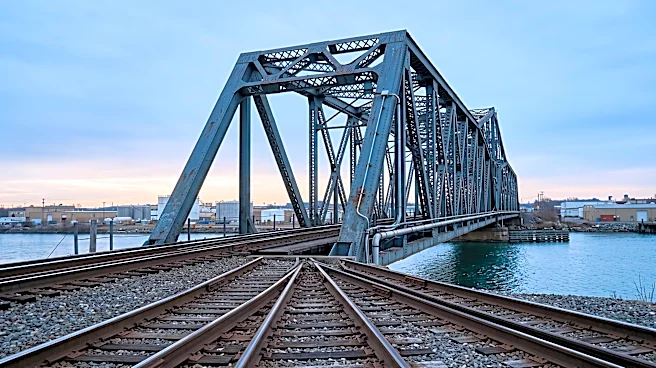
narrowing of I-35 and I-44 for surface repairs, the closure of the northbound I-35 off-ramp to S.E. Grand Blvd., and significant narrowing of I-44 between Penn Ave. and Western Ave. for a bridge replacement. Additionally, I-240 is narrowed to two lanes at I-35 as part of a multi-phase interchange improvement project, and May Ave. and N.W. Expressway are experiencing detours and lane shifts due to a bridge reconstruction. SH-37/S.E. 4th St. in Moore is closed for a railroad bridge project, and SH-66 in Edmond is narrowed for a city project. N.W. 23rd St. is also narrowed for a streetscape project. These projects are weather permitting and aim to improve the city's infrastructure.
Why It's Important?
These extensive and prolonged traffic advisories are crucial for residents and commuters in Oklahoma City, as they will significantly impact daily travel and transportation logistics. The closures and narrowings on major interstates like I-35, I-44, and I-240, which are vital arteries for regional commerce and personal travel, are likely to cause substantial delays and necessitate alternative routes. This could affect local businesses reliant on timely deliveries and customer access, potentially increasing operational costs and reducing foot traffic. For the general public, the need to navigate detours and altered traffic patterns will add to commute times and could increase fuel consumption. The long-term nature of some projects, extending through 2027, indicates a sustained period of disruption, highlighting the city's commitment to infrastructure upgrades but also posing ongoing challenges for urban mobility and economic activity.
What's Next?
Commuters and residents in Oklahoma City should anticipate continued traffic disruptions and are advised to plan their routes in advance, utilizing available traffic information and alternate routes. The Oklahoma Department of Transportation (ODOT) and the City of Oklahoma City will likely continue to provide updates on project progress and any new advisories. The ongoing nature of these projects means that the current traffic patterns and detours will remain in effect for the foreseeable future, with some lasting until 2027. Stakeholders, including businesses and residents, will need to adapt to these changes, and the city may face ongoing public feedback regarding traffic management and project timelines. The completion of these projects is expected to result in improved infrastructure, but the immediate future will be characterized by continued construction and traffic adjustments.
Beyond the Headlines
The widespread infrastructure projects in Oklahoma City underscore a broader national trend of aging infrastructure requiring significant investment and modernization. While these projects are essential for long-term urban development and safety, they also bring to light the complex balance between progress and immediate societal impact. The prolonged disruptions can test public patience and highlight the need for effective communication strategies from city planners. Furthermore, the economic implications extend beyond direct traffic delays, potentially influencing property values in affected areas, altering commuting habits, and even impacting decisions for businesses considering relocation or expansion within the city. The success of these projects will not only be measured by their completion but also by the city's ability to mitigate their short-term negative effects and ensure long-term benefits for its residents and economy.