

What's Happening?
Following the veto of former British Prime Minister Tony Blair by Arab and Muslim states, the U.S. is considering Nickolay Mladenov as a candidate to lead President Trump's proposed 'board of peace' for Gaza. Mladenov, a Bulgarian diplomat, previously
served as the U.N. special coordinator for the Middle East peace process from 2015 to 2020. He is recognized for his mediation efforts between Israel and Hamas, having played a significant role in preventing escalations and facilitating Gaza reconstruction. Mladenov's balanced approach, criticizing both Israeli and Hamas actions, has earned him credibility and trust from both sides. His extensive experience and established relationships with key Israeli and Palestinian figures make him a strong candidate for the role.
Why It's Important?
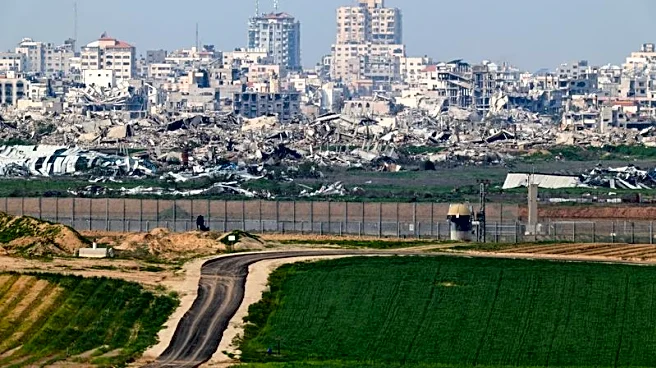
The appointment of a leader for the Gaza peace board is crucial for the stability and reconstruction of the region. Mladenov's potential leadership could facilitate continued dialogue and peace efforts between Israel and Palestine. His balanced criticism of both parties and established trust could help ensure that reconstruction funds are used appropriately, avoiding diversion to militant activities. The decision also reflects the geopolitical dynamics, as the veto against Blair highlights the influence of countries like Qatar and Turkey, which opposed Blair due to his perceived pro-Israel stance. Mladenov's appointment could signal a shift towards a more balanced approach in U.S. peace efforts in the Middle East.
What's Next?
If appointed, Mladenov would likely continue his efforts to mediate between Israel and Hamas, focusing on preventing further escalations and ensuring effective use of reconstruction funds. His established relationships with key figures in the region could facilitate smoother negotiations. The international community will be watching closely to see how Mladenov's leadership might influence the broader peace process and whether it can lead to sustainable solutions for Gaza. The U.S. will need to navigate the complex political landscape, balancing the interests of various regional powers while maintaining its strategic alliances.