



What's Happening?
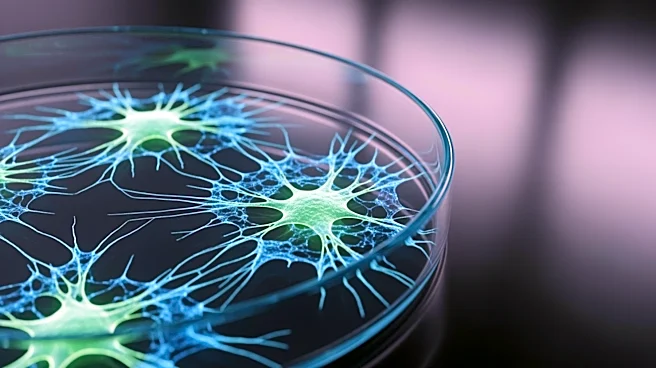
The ALS Therapy Development Institute, LifeArc, and Axol Bioscience have launched the PRISM initiative to develop new stem cell models for ALS research. This initiative focuses on creating patient-derived induced pluripotent stem cell (iPSC) models to better
represent the genetic and sporadic forms of ALS. The goal is to provide researchers with standardized models that reflect the diverse biological subtypes of ALS, thereby improving the understanding of disease mechanisms and aiding in the identification of therapeutic targets. The initiative is supported by samples from ALS patients, contributing to a more comprehensive approach to drug discovery and testing.
Why It's Important?
The development of new stem cell models for ALS is a critical step in addressing the high failure rate of clinical trials for the disease. By providing more accurate and diverse models, researchers can better understand the underlying mechanisms of ALS and develop targeted therapies. This approach has the potential to improve the success rate of clinical trials and lead to more effective treatments for ALS patients. The initiative also highlights the importance of patient involvement in research, as their contributions are essential for creating models that accurately reflect the disease's complexity.
What's Next?
The PRISM initiative will focus on expanding access to these new stem cell models for researchers and drug developers. As the models become available, they are expected to facilitate global drug discovery efforts and improve the testing of therapies across different ALS subtypes. The initiative's success will depend on continued collaboration between research institutions and the involvement of ALS patients. Future developments may include the refinement of these models and the exploration of new therapeutic targets, ultimately aiming to slow the progression of ALS and improve patient outcomes.