







What's Happening?
Memorial Day, originally established to honor the 620,000 Americans who died in the Civil War, has evolved significantly over time. Initially, the day was marked by solemn ceremonies, such as the one in 1866 in Waterloo, New York, where businesses closed
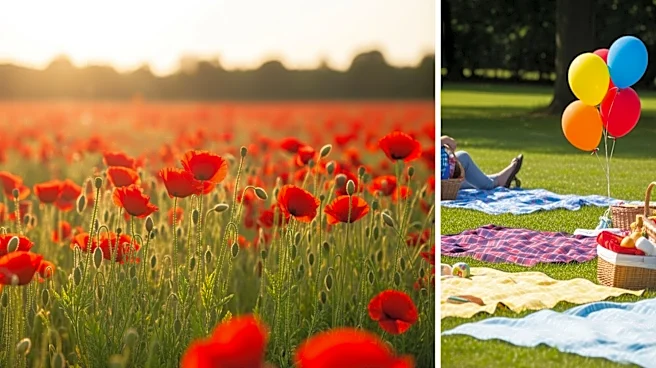
to allow residents to decorate soldiers' graves. However, historical research by Yale professor David Blight suggests that the first Memorial Day may have occurred in 1865 in Charleston, South Carolina, where freed slaves reburied Union soldiers and held a parade. Over the years, the day has transformed into a more festive occasion, often seen as the unofficial start of summer, characterized by barbecues, sales, and leisure activities. This shift began as early as four years after the Civil War, as people celebrated the end of the war and the abolition of slavery. By the 1970s, Memorial Day was moved to the last Monday in May, creating a three-day weekend that further encouraged travel and recreation.
Why It's Important?
The transformation of Memorial Day reflects broader cultural shifts in the United States. While the day still serves as a reminder of the sacrifices made by military personnel, its evolution into a holiday associated with leisure and consumerism highlights changing societal values. This shift has sparked debates about the balance between honoring military sacrifices and enjoying the freedoms they secured. The commercialization of Memorial Day, with its associated sales and festivities, underscores the tension between remembrance and celebration. This evolution also mirrors changes in public attitudes towards military conflicts, particularly in the context of unpopular wars like Vietnam, which influenced how Americans perceive and commemorate military service.
What's Next?
As Memorial Day continues to be celebrated, there may be ongoing discussions about how to appropriately honor the day’s original intent while accommodating its current cultural significance. Efforts to educate the public about the holiday's history and encourage moments of remembrance could gain traction. Additionally, there may be initiatives to balance commercial activities with commemorative events, ensuring that the sacrifices of military personnel are not overshadowed by festivities. Stakeholders, including veterans' organizations and civic groups, might advocate for a renewed focus on the day’s historical roots, potentially influencing how future generations observe Memorial Day.
Beyond the Headlines
The evolution of Memorial Day raises questions about how societies remember and honor their past. The shift from a day of mourning to one of celebration reflects broader cultural trends towards individualism and consumerism. This change also highlights the role of historical memory in shaping national identity and the ways in which public holidays can evolve to reflect contemporary values. The ongoing dialogue about Memorial Day’s significance may prompt broader reflections on how other historical events are commemorated and the balance between honoring the past and embracing the present.