


What's Happening?
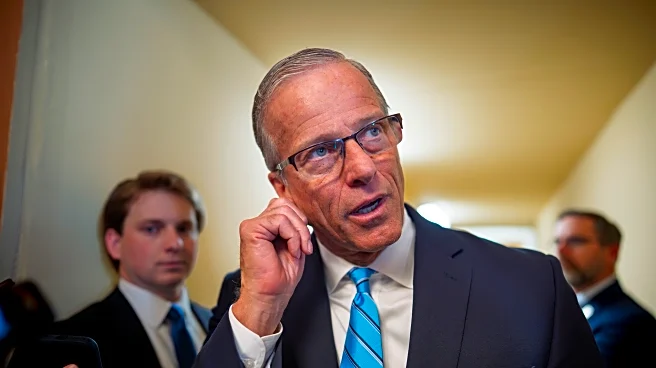
Senate Majority Leader John Thune and House Speaker Mike Johnson have announced a two-track plan to fund the Department of Homeland Security (DHS). This approach aims to fund the Transportation Security Administration (TSA) immediately while deferring
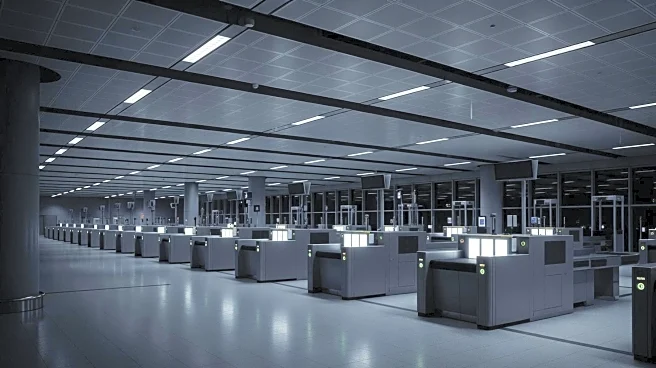
the debate over the more contentious immigration enforcement functions of the agency. The plan involves using the appropriations process for most of DHS and budget reconciliation for Immigration and Customs Enforcement (ICE) and Customs and Border Protection (CBP). This strategy follows a failed attempt to pass a Senate bill that would have funded all of DHS except for ICE and CBP, which was rejected by House conservatives. The shutdown has led to significant disruptions, particularly affecting TSA operations, as unpaid agents have been calling out of work.
Why It's Important?
The shutdown of DHS has significant implications for national security and public safety, as well as for the livelihoods of thousands of federal employees. The two-track funding approach could potentially resolve the immediate issues faced by TSA, alleviating travel disruptions. However, the ongoing debate over immigration enforcement funding highlights deep political divisions. The use of budget reconciliation could bypass the need for a supermajority in the Senate, allowing Republicans to advance their agenda without Democratic support. This situation underscores the broader challenges in reaching bipartisan agreements on immigration policy and funding.
What's Next?
The proposed two-track plan could lead to a resolution of the DHS funding impasse if it gains sufficient support in Congress. However, the process of budget reconciliation can be lengthy and complex, potentially delaying the resolution. The shutdown is expected to continue at least until mid-April, as Congress is currently in recess. The outcome of this funding debate could set a precedent for future negotiations on contentious issues, particularly those involving immigration enforcement.