





What's Happening?
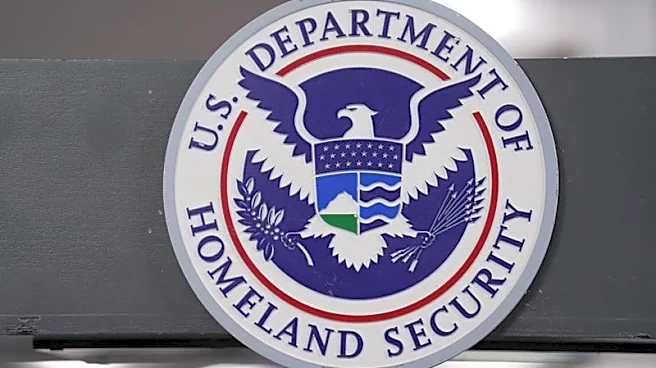
Homeland Security Secretary Markwayne Mullin has announced the recall of the entire Department of Homeland Security (DHS) workforce, despite the ongoing partial government shutdown. This decision comes as thousands of federal employees have been furloughed
and have not received paychecks for weeks. The DHS plans to utilize available funding to bring employees back to work, with back pay dating to February 14, when the funding lapsed. The shutdown, which is the longest in history, has significantly impacted airport security and other critical services. The recall includes employees from agencies such as the Federal Emergency Management Agency (FEMA) and the Cybersecurity and Infrastructure Security Agency. The move has raised legal and budgetary questions, particularly concerning the Antideficiency Act, which restricts federal agencies from obligating funds not appropriated by Congress.
Why It's Important?
The recall of DHS employees is crucial for maintaining national security and disaster readiness, especially with the approach of hurricane season and ongoing spring flooding. The decision to bring back furloughed employees highlights the administration's prioritization of homeland security operations, despite the lack of congressional funding. This move could set a precedent for how federal agencies manage funding lapses in the future, potentially expanding the definition of 'excepted' work. However, it also underscores the financial precarity faced by federal workers during shutdowns and the need for legislative solutions to prevent such situations. The recall may alleviate some operational challenges, but it also places pressure on Congress to resolve the funding impasse.
What's Next?
The DHS has indicated that employees will continue to be paid using available funds, but future paychecks depend on congressional action. The administration is urging Congress to pass a funding bill to ensure the continued operation of DHS. The Senate has proposed a deal to fund DHS, excluding Immigration and Customs Enforcement and Customs and Border Protection, but House Republicans have yet to agree. President Trump has expressed a desire for a reconciliation bill by June 1. The ongoing shutdown and funding uncertainty may lead to further legal challenges and operational adjustments within DHS.