





What's Happening?
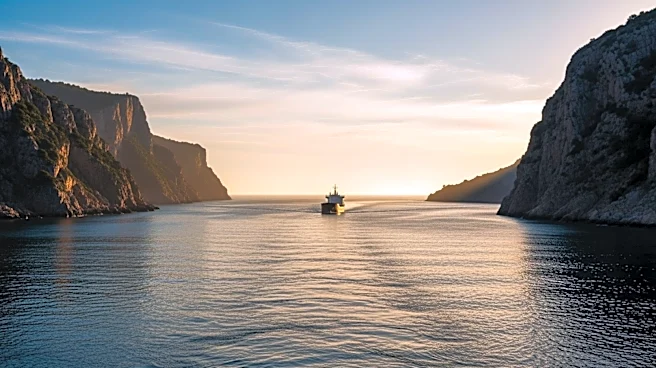
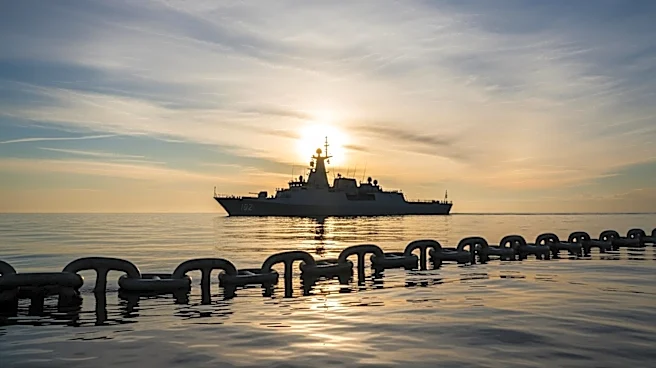
President Trump encountered a significant challenge in his efforts to manage the US-Iran conflict as Tehran closed the Strait of Hormuz, a critical waterway for global oil shipments. This move came after President Trump announced that the US would maintain
its naval blockade of Iranian ports until a transaction with Iran was fully completed. The situation escalated when the Islamic Revolutionary Guard Corps reportedly fired at a tanker attempting to pass through the strait. In response, President Trump convened a meeting in the White House Situation Room to address the crisis. Despite previous claims that Iran had agreed to keep the strait open, the closure marks a reversal and raises concerns about the potential for renewed conflict.
Why It's Important?
The closure of the Strait of Hormuz has significant implications for global oil markets and geopolitical stability. As a major chokepoint for oil shipments, any disruption can lead to increased oil prices and economic uncertainty. The US blockade and Iran's response highlight the fragile nature of international relations in the region. The situation also underscores the challenges President Trump faces in navigating complex diplomatic negotiations while maintaining US strategic interests. The potential for military escalation remains a concern, with implications for regional security and global economic stability.
What's Next?
The immediate focus will be on diplomatic efforts to reopen the Strait of Hormuz and de-escalate tensions. President Trump may seek to engage with international partners to mediate the situation and prevent further conflict. The outcome of these efforts will be crucial in determining the next steps in US-Iran relations. Additionally, the international community will be closely monitoring the situation, as any prolonged disruption could have widespread economic and political consequences.